


Retail and E-Commerce • AI-Driven Solutions


From strategy and proof of concept through to production deployment and ongoing optimization, we deliver a complete spectrum of computer vision software development services — tailored to your industry, your data, and your operational realities.

Our computer vision consulting services help organizations identify high-value opportunities to automate visual workflows, improve operational efficiency, and enhance decision-making through AI-driven image and video analysis. We assess business requirements, data readiness, technology feasibility, and implementation strategies to create a roadmap tailored to your objectives. We help enterprises adopt the right technologies, architectures, and deployment models to maximize business value while minimizing implementation risks.

Our optimization services improve the accuracy, speed, scalability, and efficiency of computer vision models operating in real-world environments. We refine model architectures, optimize inference performance, reduce latency, and enhance prediction accuracy to support large-scale deployments. Using advanced deep learning techniques, we help organizations maximize model performance while reducing operational costs and ensuring reliable outcomes across diverse use cases.

We develop intelligent image recognition ai solutions that enable organizations to automatically identify, classify, and analyze visual content at scale. Our team builds AI-powered systems that extract valuable insights from images for applications such as product categorization, document processing, medical imaging, visual search, and automated quality assessment. As part of our custom computer vision solutions, we help businesses improve accuracy, reduce manual effort, and accelerate decision-making through intelligent visual analysis.

Our object detection and tracking solutions enable organizations to identify, locate, and monitor people, products, assets, and equipment in real time across complex operational environments. Using advanced AI models, we build systems that support manufacturing quality control, workplace safety, inventory tracking, intelligent surveillance, and logistics operations. By leveraging object detection, organizations gain greater operational visibility, automate monitoring processes, and improve responsiveness to business-critical events.
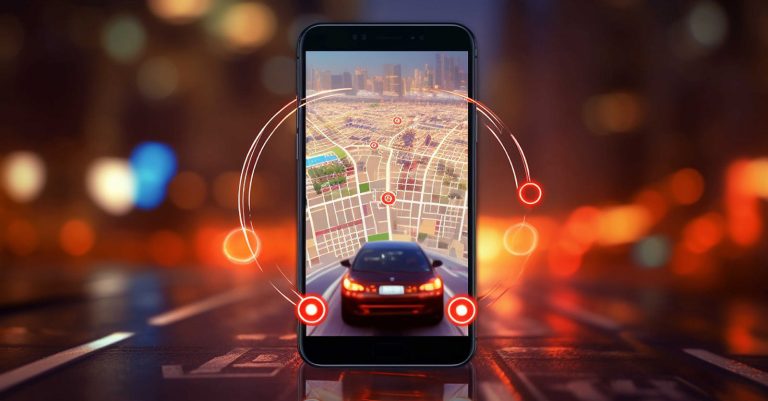


Our computer vision and visual intelligence development expertise spans diverse industries, each with unique compliance requirements, data characteristics, and domain-specific llm challenges. We bring proven experience across:
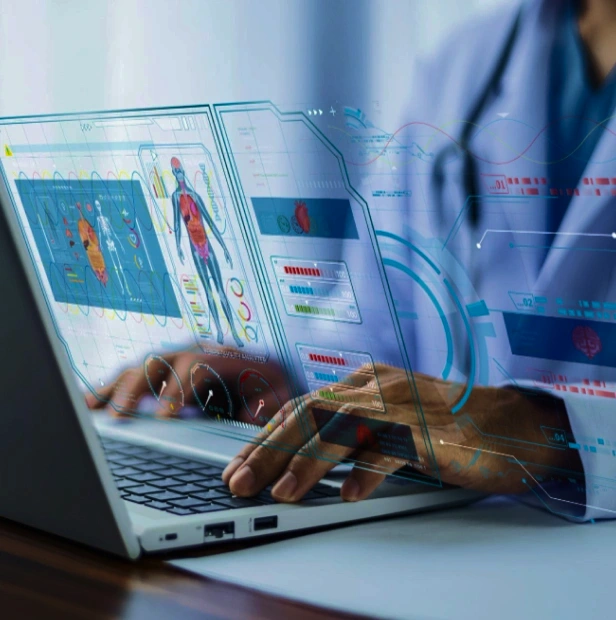
 Healthcare and Life Sciences
Medical image analysis, diagnostic imaging AI, pathology slide interpretation, EEG and signal visualization, and clinical workflow automation.
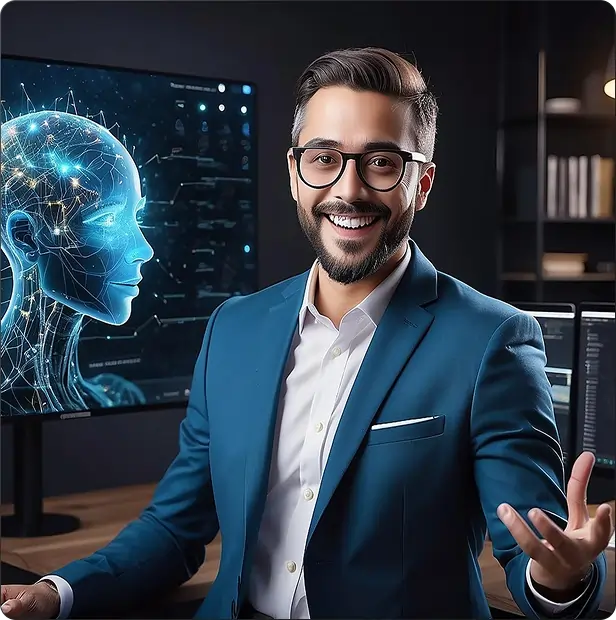
 Manufacturing and Industrial
AI-powered visual inspection, automated defect detection, dimensional measurement, assembly verification, and worker safety monitoring on production lines.
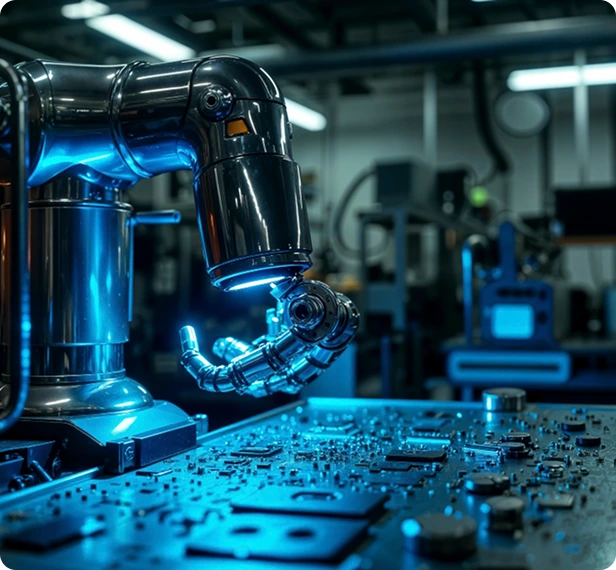
 Retail and E-Commerce
Shelf analytics, planogram compliance, customer behavior analysis, product recognition for catalog automation, and self-checkout vision systems.
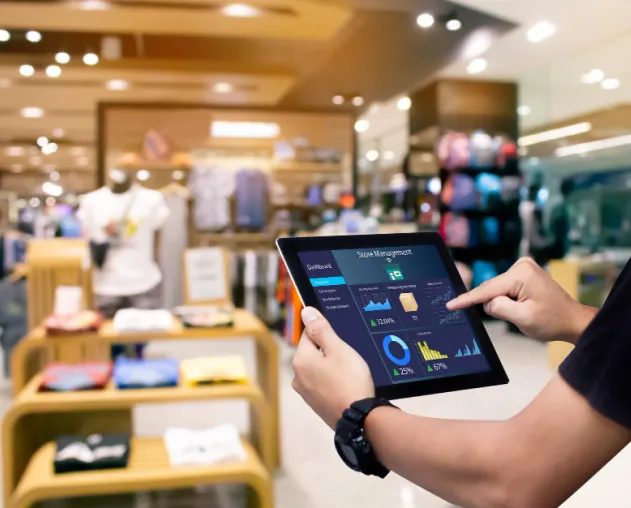
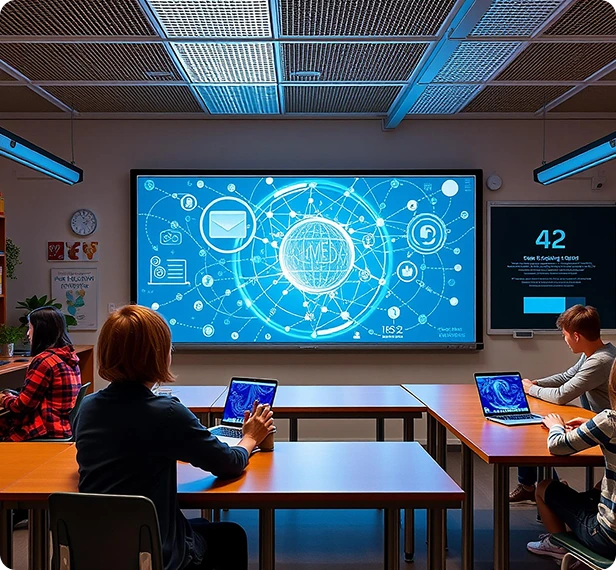
 Education and EdTech
Multimodal student interaction systems, document and handwriting recognition, engagement analytics, and AI-assisted assessment tools.
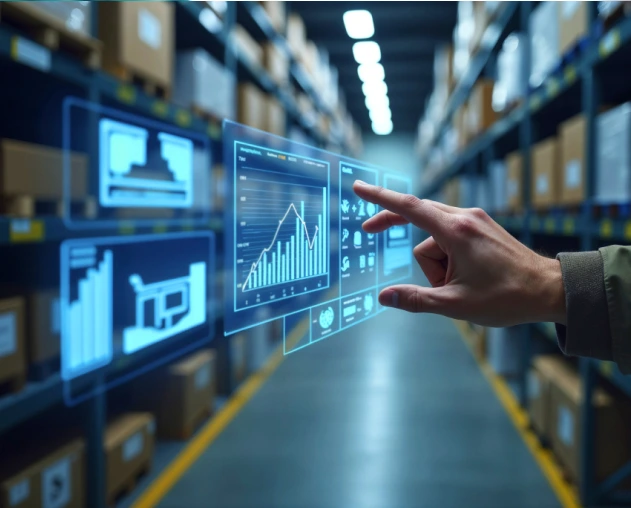
 Logistics and Supply Chain
Package and label recognition, damage detection, automated sorting vision, inventory counting, and loading bay monitoring.
 Financial Services
Document digitization and verification, identity document recognition, cheque processing automation, and fraud detection from visual data.

 Agriculture and Environment
Crop disease detection, yield estimation from aerial imagery, precision agriculture analytics, and environmental monitoring from satellite and drone feeds.

As a trusted computer vision solutions provider, we work across the full spectrum of visual intelligence technologies that organizations need to automate, analyze, and scale.


Deep learning models that classify objects, products, defects, and scenes with high accuracy across diverse visual domains.


Real-time detection and multi-object tracking across video streams for manufacturing, retail, logistics, and security applications.


Continuous video stream analysis for event detection, behavior recognition, crowd analytics, and anomaly alerting.


Automated defect detection, dimensional measurement, and assembly verification systems for manufacturing quality control.


Custom CNN, transformer, and hybrid architectures trained on your domain data — optimized for accuracy, latency, and edge deployment.


Pixel-level scene understanding for medical imaging, autonomous systems, precision agriculture, and industrial applications.


Depth sensing, LiDAR processing, and 3D reconstruction for robotics, autonomous navigation, and spatial measurement.


Low-latency inference optimized for edge hardware — NVIDIA Jetson, Intel NUC, Raspberry Pi, FPGAs — for real-time on-device processing.
Most AI shops are either pure research specialists (deep on models, light on production engineering) or traditional software firms bolting AI onto a sales pitch. We are something different — a 25-year enterprise software company with a focused, hands-on AI practice and live custom computer vision solutions in production today.
Years of Engineering Experience
Projects Deployed to Production
Global Clients Across 21 Countries
Offices Across the Globe
We follow an agile, iterative methodology that ensures transparency, rapid value delivery, and continuous improvement throughout your computer vision software development program.
PHASE 01
PHASE 02
PHASE 03
PHASE 04
PHASE 05
PHASE 06
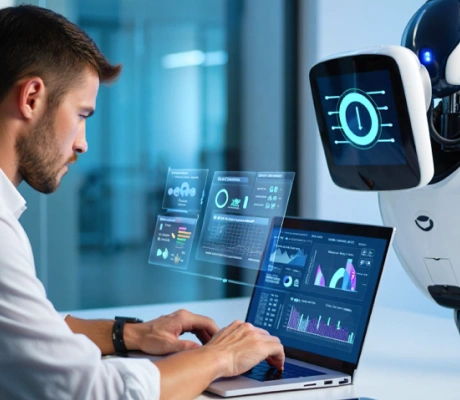
AI computer vision services give machines the ability to interpret and act on visual data — enabling automation, quality assurance, and intelligence at a scale and consistency that human operators cannot match.

A computer vision system can inspect every unit on a production line — 24 hours a day, 7 days a week — with sub-millimeter precision and zero fatigue. Traditional manual sampling catches only a fraction of defects and operates at significantly lower throughput.

Video analytics layers intelligence onto the camera feeds you already operate — turning passive surveillance into active operational intelligence without replacing hardware.

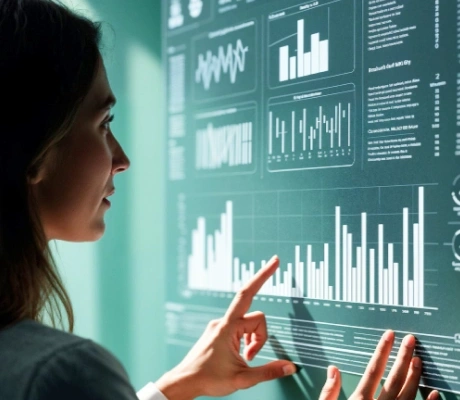
Computer vision converts images, video, and sensor feeds into structured, query able data — opening up automation and analytics opportunities across processes that previously resisted digitalization.

Automating visual tasks that currently require skilled human labor reduces operational costs, removes human error, and frees your workforce to focus on higher-value work.

Enterprise computer vision solutions are not a feature — they are an infrastructure shift. Organizations that deploy their first visual intelligence systems now build the data, labeling pipelines, and model governance frameworks needed to scale.
From object detection to intelligent automation, we help businesses see what's possible. Let's build your next-generation computer vision solution.
Computer vision services span strategy, custom model development, image recognition, object detection, video analytics, visual inspection, edge deployment, and ongoing MLOps.
Deep learning models trained on annotated datasets extract patterns from images; at inference, they produce classifications, bounding boxes, or segmentation masks in real time.
Benefits include 100% inspection coverage replacing manual sampling, real-time awareness from existing cameras, structured data from visual inputs, and lower monitoring costs.
Cost depends on data availability, model complexity, and deployment environment. A focused proof-of-concept starts at a fixed-bid price after a scoping conversation.
Computer vision solutions span manufacturing, healthcare, retail, logistics, education, and financial services, with published case studies in managed it services and 16+ other industries..
Image recognition labels what's in an entire image; object detection identifies objects and localizes each with a bounding box, answering where too.
We work across PyTorch, TensorFlow, and ONNX; YOLO, Detectron2, and Vision Transformers; OpenCV; and edge inference on NVIDIA Jetson and TensorRT.
We audit dataset quality, use domain-representative test splits, evaluate against your specific KPIs, run staged human-in-the-loop rollouts, and monitor for drift post-deployment.
Yes. We've integrated computer vision with SAP, Oracle, Dynamics 365, MES, SCADA, and HL7/FHIR systems via REST, MQTT, OPC-UA, and webhooks.
Yes, we sign mutual NDAs before discovery. Custom model code, training pipelines, and annotated datasets built for your engagement are fully owned by you.

What Happens Next?
 100% Confidential. NDA available on request.Response within 4 business hours.No obligation to get started.
Share Your Requirements

Your information is secure and never shared with third parties.

Thank You!
We will contact you within four business hours. In the meantime, feel free to explore our case studies or read our latest Insights.


