


Energy and Utilities • BI and Data Analytics


From foundational data management and ingestion through automation, governance, and enterprise analytics, we deliver a complete spectrum of DataOps consulting services tailored to your data landscape, your teams, and your business priorities.

We help organizations establish modern data ecosystems that centralize, organize, and optimize enterprise data across business functions, working closely with our data engineering services practice on the underlying architecture. Our teams design scalable data architectures, streamline data workflows, and enable secure access to trusted information for analytics and operational decision-making. Through our DataOps services, we help businesses improve data availability, reduce operational complexity, and create a strong foundation for data-driven transformation initiatives.

We build robust data ingestion frameworks that collect, transform, and integrate data from multiple enterprise applications, cloud platforms, APIs, and third-party systems. Leveraging our expertise in data integration services, we enable seamless data movement across complex environments while ensuring consistency, accessibility, and operational efficiency. This helps organizations accelerate analytics initiatives and gain a unified view of business information.

We help organizations improve the accuracy, consistency, and reliability of enterprise data through automated validation, cleansing, monitoring, and governance frameworks, feeding directly into our data intelligence Services practice. Our solutions identify anomalies, eliminate duplicates, and enforce quality standards across the data lifecycle. Through comprehensive data quality management, we enable businesses to make confident decisions based on trusted data while reducing operational risks associated with poor data quality.

We implement automated CI/CD frameworks that accelerate the development, testing, and deployment of data pipelines and analytics workloads. Through our DataOps implementation services, organizations can improve release velocity, reduce deployment errors, and maintain consistency across development and production environments. Our approach to data pipeline automation enables faster innovation while ensuring stability, governance, and operational reliability throughout the data lifecycle.



Enterprise data operations require genuine domain knowledge of the systems, regulations, and data structures specific to each industry. We bring sector-specific expertise to every DataOps consulting services engagement ensuring pipelines, governance, and analytics reflect the realities of your business.
 Healthcare and Life Sciences
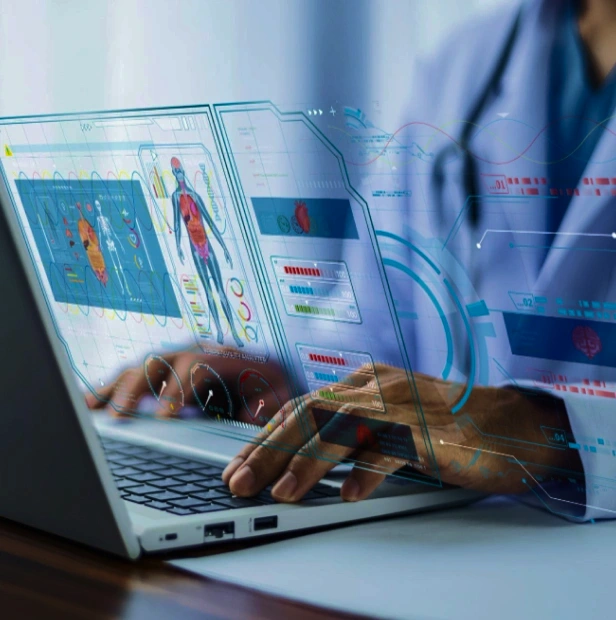
Patient data integration across EHR and clinical systems, HIPAA-compliant data pipelines, clinical research data management, and quality-controlled data feeds for population health analytics.
 Financial Services and Insurance
Regulatory reporting automation, customer data integration across policy and claims systems, risk data pipelines, fraud analytics data feeds, and governance frameworks aligned to SOX, GDPR, and Basel III requirements.

 Retail and E-Commerce
Omnichannel customer data integration, real-time inventory and merchandising pipelines, personalization data feeds, and automated quality monitoring for high-volume transactional data.

 Manufacturing and Industrial
Shop floor and IoT data ingestion, production performance analytics, supply chain data integration across ERP and logistics systems, and quality data pipelines for predictive maintenance.

 Logistics and Supply Chain
Real-time shipment and fleet data integration, carrier data pipelines, supply chain visibility dashboards, and data quality frameworks supporting demand forecasting.

 Government and Public Sector
Citizen data integration across agency systems, data governance frameworks aligned to data sovereignty requirements, and analytics platforms supporting public service reporting.

Our DataOps engineering team combines deep expertise across data ingestion, pipeline orchestration, quality automation, governance tooling, cloud platforms, and analytics delivering reliable, observable, and scalable data operations across the full enterprise technology stack.


Apache Kafka, Apache NiFi, Fivetran, Azure Data Factory, AWS Glue, Informatica, REST and GraphQL APIs, change data capture (CDC), batch and streaming ingestion frameworks.


Great Expectations, Monte Carlo, Soda, automated anomaly detection, data lineage tracking, real-time pipeline health dashboards, alerting and incident management frameworks.


Collibra, Apache Atlas, Alation, data lineage mapping, policy enforcement frameworks, role-based access control, and regulatory compliance frameworks (GDPR, HIPAA, SOX).


Snowflake, Databricks, Azure Synapse Analytics, AWS Redshift, Google BigQuery, AWS, Azure, and Google Cloud Platform native data services.


Power BI, Tableau, Looker, Python, SQL, predictive analytics frameworks, self-service reporting platforms, executive dashboard design.
We help enterprises build reliable, scalable, and secure DataOps ecosystems that accelerate trusted data delivery and enable confident, data-driven decision-making.
Years of Engineering Experience
Projects Deployed to Production
Global Clients Across 21 Countries
Offices Across the Globe
Every DataOps engagement follows a structured six-phase methodology refined across 25+ years of enterprise software and data delivery and designed to address the specific failure modes of data programs: inconsistent pipelines, poor data quality, weak governance, and under-resourced operations.
PHASE 01
PHASE 02

PHASE 03

PHASE 04

PHASE 05

PHASE 06

Tell us about your data environment, the outcomes you need to achieve, and the data challenges holding your teams back.
DataOps applies DevOps-style automation and governance to the data lifecycle, from ingestion to monitoring, including regulated pipelines for our clients.
DevOps automates building and deploying application code; DataOps applies those same principles to data pipelines, adding stronger emphasis on quality, lineage, and governance.
DataOps embeds automated validation, completeness, and freshness checks directly into pipelines, with real-time observability catching anomalies before they reach downstream reports.
Most enterprises have fragile, inconsistently built pipelines. DataOps consulting brings an objective assessment and roadmap.
Managed DataOps delivers 24/7 monitoring, incident response, and continuous onboarding of new sources, without requiring you to build a full in-house team.
A focused initial engagement with priority pipelines typically delivers in 10–16 weeks; a full enterprise transformation spans 6–12 months of phased delivery.
You get senior data engineers and architects with hands-on production experience, across cloud data platforms.
Yes. We implement monitoring across your entire data estate, covering pipeline health, freshness, schema changes, and quality metrics with real-time alerting.

What Happens Next?
 100% Confidential. NDA available on request.Response within 4 business hours.No obligation to get started.
Share Your Requirements

Your information is secure and never shared with third parties.

Thank You!
We will contact you within four business hours. In the meantime, feel free to explore our case studies or read our latest Insights.


