Industries Banner

Industry and Automation Software Development

Our industry and automation software development services help manufacturers and industrial enterprises adopt AI-powered, scalable solutions for connected production. We support Industry 4.0 initiatives by integrating control systems, modernizing operations, and enabling next-generation industrial automation across the production floor.

View Case Studies
Industry and Automation Software Development

What We Do

Our industrial automation engineering services across smart manufacturing, predictive maintenance, MES integration, and industrial analytics enable organizations to streamline operations, enhance production visibility, and deliver measurable business impact.

Benefits of Our Industry and Automation Software Services

We help manufacturers, OEMs, industrial enterprises, and plant operators modernize operations with AI, Industrial IoT, cloud, and automation technologies. We develop intelligent manufacturing solutions that improve production efficiency, optimize asset performance, and reduce operational costs.

01

Enhanced Operational Visibility

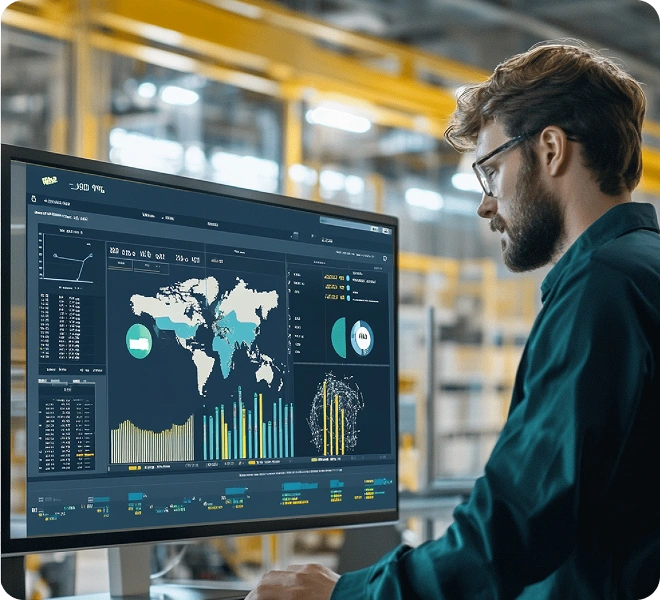
Our real-time tracking platforms, centralized dashboards, and intelligent monitoring systems provide end-to-end visibility across the production lifecycle, enabling proactive decision-making and eliminating operational blind spots.

02

Improved Production Efficiency

Through AI-driven workflow automation, predictive scheduling, and machine monitoring capabilities, we help manufacturers reduce production time, improve equipment utilization, and enhance overall operational performance.

03

Reduced Operational Costs

By automating manual production workflows, optimizing maintenance planning, and streamlining shop-floor processes, we help organizations improve efficiency and achieve measurable cost savings across the production supply chain.

04

Faster Time-to-Market

Our intelligent digital manufacturing and cloud-based delivery solutions accelerate production scheduling, quality checks, and deployment processes, enabling faster releases and improving customer satisfaction.

05

Stronger Regulatory Compliance

With integrated compliance frameworks, automated documentation, and secure data management practices, we help organizations meet industry regulations and maintain operational compliance across global production networks.

06

Scalability and Future Readiness

Our cloud-native factory automation platforms are designed to support growing production volumes, expanding facility networks, and evolving operational requirements without infrastructure limitations.

07

Seamless System Integration

Leveraging APIs, cloud technologies, and integration frameworks, we connect PLC, SCADA, MES, and ERP platforms to create unified and efficient production ecosystems.

08

Data-Driven Decision-Making

Our analytics platforms, KPI dashboards, and AI-powered forecasting solutions provide actionable insights that enable production leaders to optimize operations strategy and make informed decisions.

Benefits of Our Industry and Automation Software Services

Transform Industry Operations with Intelligent Digital Solutions

Background Image

Why Choose Us For Industry and Automation Software Development

We are a trusted industrial automation company with expertise in AI, predictive maintenance, MES, PLC, SCADA, robotics, and smart manufacturing solutions. Our integration-first and end-to-end engineering capabilities help industrial organizations modernize operations, improve productivity, and build scalable, connected production ecosystems.

Deep Industry and Automation Domain Expertise

Our teams understand the workflows, compliance requirements, and integration challenges unique to manufacturing and industrial organizations. We bring practical expertise in industrial operations, automation technologies, and digital transformation to deliver solutions aligned with real-world business needs.

AI and Automation-Driven Engineering

Strong capabilities in AI-powered quality inspection, predictive maintenance, digital twin modeling, and intelligent process automation that enable industry and automation software development services to deliver measurable operational performance improvements aligned with Industry 5.0 principles of human-centric, resilient manufacturing.

Integration-First Architecture

Automation platforms we build are engineered for seamless connectivity with PLC and SCADA systems, ERP platforms, MES layers, and third-party industrial applications — ensuring a fully connected and data-driven production ecosystem.

Strategic Partnerships with Leading Technology Providers

Verified partnerships with Microsoft, Salesforce, UiPath, Samsung SDS, and other technology leaders position us among trusted industrial automation companies, enabling access to best-in-class cloud, automation, and enterprise platforms for delivering scalable industry and automation software.

End-to-End Engineering Capabilities

From product strategy and UX design to development, integration, quality assurance, cloud operations, and managed support, we provide a single engineering partner for building, scaling, and optimizing industry and automation digital ecosystems.

Years of Engineering Experience

Projects Deployed to Production

Global Clients Across 21 Countries

Offices Across the Globe

Ready to Build Smarter, More Connected Industry and Automation Operations?

Accelerate industrial digital transformation across production, maintenance, and quality operations with intelligent automation platforms designed to improve visibility, efficiency, and business performance.

background image

Frequently Asked Questions

What are industrial automation services?

Industrial automation services involve designing and building custom digital platforms that automate, optimize, and manage production, maintenance, quality, and plant operations. These solutions include manufacturing execution systems, predictive maintenance platforms, digital twin technology, robotics software, and end-to-end automation platforms that improve operational efficiency, reduce costs, and enhance production visibility for industry and automation organizations.

How does industrial automation improve manufacturing efficiency?

Industrial automation improves manufacturing efficiency by automating repetitive production tasks, centralizing shop-floor data, enabling real-time equipment monitoring, and streamlining maintenance planning. These platforms reduce manual effort, accelerate production cycles, minimize downtime, and provide manufacturers with the data needed to make informed operational and production decisions.

What is Industry 5.0 and how does it work?

Industry 5.0 builds on earlier generations of manufacturing automation by placing greater emphasis on human-centric, resilient, and sustainable production. It works by combining AI, robotics, and connected sensor technology with collaborative human-machine workflows, enabling manufacturers to achieve high levels of automation while preserving worker involvement, adaptability, and environmental responsibility across production operations.

How can industrial automation reduce production costs?

Industrial automation reduces production costs by minimizing manual labor requirements, reducing equipment downtime through predictive maintenance, improving material and energy utilization, and eliminating errors caused by manual processes. Automated scheduling, quality inspection, and data-driven planning further help manufacturers lower operational overhead and improve overall production economics.

What industries benefit from industrial automation?

A wide range of industries benefit from industrial automation, including automotive, electronics, pharmaceuticals, food and beverage, heavy machinery, consumer goods, and industrial equipment manufacturing. Organizations across these sectors use automation platforms to improve production efficiency, ensure quality consistency, and scale operations across multiple facilities and production lines.

What is the difference between a PLC, SCADA, and MES system?

A Programmable Logic Controller reads field inputs and executes real-time control logic on individual machines, while a SCADA system provides centralized supervisory monitoring and control across multiple machines and processes through a dashboard interface. A Manufacturing Execution System, meanwhile, sits above both layers to orchestrate shop-floor schedules, track parts, and manage traceability data, connecting plant-floor operations with higher-level planning and enterprise systems.

Why choose custom software for manufacturing and automation organizations?

Custom software is the preferred choice for manufacturing and automation organizations because off-the-shelf platforms rarely accommodate complex production workflows, multi-facility operations, and equipment integration requirements unique to each organization. Purpose-built platforms provide tailored automation, deeper integration with existing control systems, and the flexibility to scale alongside evolving production strategies and operational demands.

How much does industry and automation software development cost?

The cost of industry and automation software development varies based on platform complexity, module scope, integration requirements, and delivery methodology. Focused single-module platforms such as a predictive maintenance tool or quality inspection system typically require a moderate investment, while comprehensive end-to-end automation platforms with advanced AI, digital twin, and robotics capabilities require greater investment. We recommend a phased delivery approach that delivers core functionality rapidly while building toward a comprehensive platform roadmap.

What ongoing support do you provide after an automation platform goes live?

Post-deployment support extends beyond go-live to include application management, cloud infrastructure operations, performance monitoring, security patching, continuous feature development, and user support services. This ensures industry and automation platforms remain secure, performant, and capable of adapting to evolving business requirements, regulatory changes, and technology advancements over the long term.