AI
AI Agent vs Chatbot: Key Differences, Use Cases, and Business Benefits
 Updated 19 Jan 2026
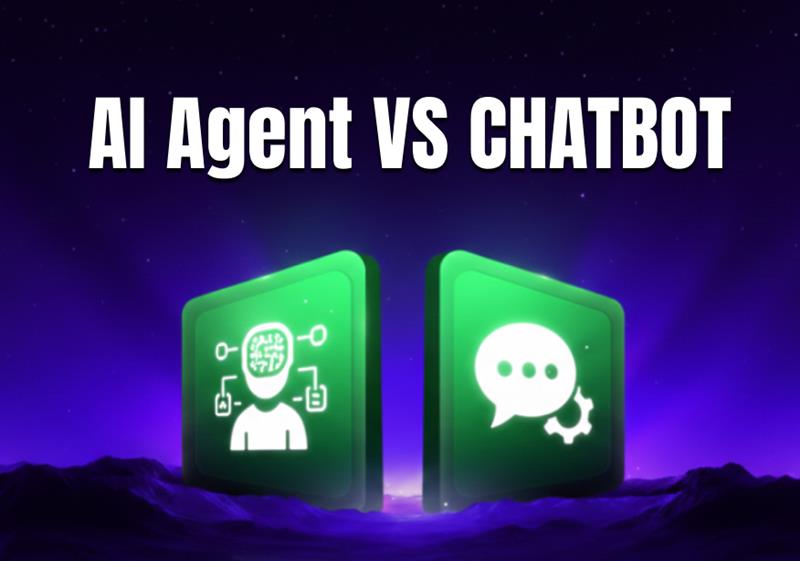
Key Takeaways
- AI agents are more intelligent and proactive than chatbots, handling complex queries and multi-step interactions with contextual understanding.
- Chatbots are ideal for simple, repetitive tasks, providing quick responses, lead collection, and FAQ handling efficiently.
- AI virtual assistants and agents offer personalization, predictive insights, and integration with business systems for enhanced customer experience.
- Choosing between AI agents and chatbots depends on business needs, task complexity, and desired level of automation.
- Partnering with an AI development company ensures scalable, secure, and effective conversational AI solutions that drive operational efficiency and business growth.
In today’s digital-first world, businesses are exploring smarter ways to engage customers and streamline operations. Conversational AI technologies have become essential in this journey, helping companies automate communication, provide faster support, and enhance the overall user experience. Two of the most talked-about solutions in this space are AI agents and chatbots. While they may seem similar at first glance, understanding the difference between them is crucial for businesses aiming to leverage conversational AI effectively.
Companies often find themselves asking, “Should we invest in a virtual agent vs a chatbot?” or “When to use AI agents vs chatbots?” Choosing the right solution can significantly impact customer satisfaction, operational efficiency, and overall ROI. In this blog, we’ll break down the key differences between an AI agent vs chatbot, their use cases, benefits, and why modern businesses are increasingly turning to AI-driven solutions provided by an experienced AI development company.
What Is a Chatbot?
A chatbot is a software application designed to interact with users through text or voice. Most chatbots follow predefined rules or scripts to respond to specific commands. These rule-based bots are limited to handling straightforward queries, like providing store hours, product information, or booking confirmations.
For example, a customer might ask, “What are your business hours?” A chatbot program with this response will answer immediately. However, if the customer asks a more complex question, like “Can you recommend a product that suits my needs?”, many traditional chatbots will struggle.
Modern chatbots, often powered by AI, can perform slightly more complex interactions, but their intelligence remains limited compared to a full-fledged AI agent. Businesses widely use chatbots because they are cost-effective, quick to deploy, and efficient for repetitive tasks.
Common applications include:
- Customer support for FAQs
- Appointment scheduling
- Lead collection and qualification
- Basic e-commerce guidance
However, businesses must recognize that chatbots are best suited for simple interactions and predefined workflows.
What Is an AI Agent?
An AI agent takes conversational AI a step further. Unlike chatbots, AI agents leverage advanced machine learning, natural language processing (NLP), and contextual understanding to perform more complex tasks. AI agents can think, learn, and make decisions in real time, creating a more human-like interaction experience.
For example, a customer asking an AI agent, “I want a gift for my mother who loves gardening,” will receive personalized recommendations based on past interactions, preferences, and product data. AI agents are proactive—they can analyze user behavior, predict needs, and even automate follow-up actions.
Key features of AI agent development services include:
- Contextual understanding of conversations
- Predictive analytics and recommendations
- Integration with multiple business systems (CRM, ERP, marketing tools)
- Multi-turn conversation handling
- Personalized and adaptive responses
AI agents are ideal for businesses aiming to deliver a higher level of service, where interactions go beyond simple queries and require dynamic, intelligent decision-making.
Transform Customer Engagement with AI Agents
Partner with Q3 Technologies to implement AI agent and chatbot solutions that enhance customer experience, automate workflows, and drive business growth.
Difference Between an AI Agent and a Chatbot
Understanding the difference between an AI agent and a chatbot is essential for businesses planning a conversational AI strategy. Here’s a detailed comparison:
| Feature | Chatbot | AI Agent |
|---|---|---|
| Intelligence Level | Rule-based or basic AI | Advanced AI with predictive capabilities |
| Context Awareness | Limited to the current session | Maintains conversation context across sessions |
| Complex Queries | Struggles with complex questions | Handles multi-step and complex interactions |
| Personalization | Minimal or none | High; learns from user behavior and preferences |
| Proactivity | Only responds to user prompts | Initiates actions, provides recommendations, and anticipates needs |
| Integration | Limited; mostly standalone | Integrates with CRM, ERP, and analytics platforms |
| Best Use Cases | FAQ handling, simple tasks, lead collection | Customer support, banking advice, e-commerce recommendations, HR automation |
In short, chatbots are reactive and simple, while AI agents are intelligent, proactive, and capable of managing sophisticated workflows. This distinction becomes crucial when deciding when to use AI agents vs chatbots for business operations.
AI Agent vs Chatbot Benefits for Modern Businesses
Businesses adopting conversational AI enjoy a wide range of benefits. Here’s a detailed look at the AI agent vs chatbot benefits:
Improved Customer Experience
AI agents provide a more human-like experience with personalized responses, while chatbots handle repetitive queries efficiently. Together, they reduce waiting times, improve satisfaction, and enhance brand perception.
Operational Efficiency
AI agents can automate complex workflows, such as processing claims in insurance or handling banking queries, reducing the workload for human employees. Chatbots manage high-volume repetitive queries, freeing human agents for strategic tasks.
24/7 Availability
Both AI agents and chatbots ensure round-the-clock service, enabling businesses to serve customers globally without time-zone limitations.
Data-Driven Insights
AI agents capture valuable interaction data, providing insights into customer behavior, preferences, and pain points. Businesses can use these insights for strategic decision-making, marketing campaigns, and product development.
Cost Reduction
Automating customer support and operational tasks lowers staffing costs. While chatbots handle simple tasks at minimal cost, AI agents can reduce errors and optimize complex workflows, offering higher ROI.
Competitive Advantage
Companies investing in advanced AI solutions gain an edge by offering superior service quality, faster resolution times, and innovative customer engagement strategies.
Overall, the choice between a chatbot and an AI agent depends on business complexity, user expectations, and long-term goals.
Read Our Case Study: Revitalizing Sales Enablement with an AI-Powered Chatbot for a Leading FMEG Company
Virtual Agent vs Chatbot: Key Functional Differences
The term virtual agent is often used interchangeably with AI agents, but there are subtle distinctions worth noting:
Task Handling
Chatbots execute predefined tasks and respond to FAQs, while virtual agents perform multiple tasks such as transaction processing, personalized guidance, and workflow automation.
Context Management
Chatbots typically forget previous interactions once a session ends. Virtual agents maintain context across multiple interactions, enabling continuity and more meaningful conversations.
Proactivity
Chatbots are reactive and respond to user queries only. Virtual agents can initiate tasks, offer suggestions, and alert users based on predictive analytics.
Integration Capabilities
Chatbots have limited integration and mostly handle front-end tasks. Virtual agents seamlessly integrate with backend systems like CRM, ERP, and marketing tools, providing a unified user experience.
Understanding this difference helps businesses decide whether a simple chatbot or a sophisticated virtual agent vs chatbot solution aligns better with their strategic objectives.
AI Virtual Assistants vs. Chatbots Explained
AI virtual assistants are specialized AI agents designed to perform tasks that require reasoning, personalization, and ongoing learning. They are particularly effective in industries like banking, healthcare, and enterprise operations.
Personalization: Virtual assistants learn from previous interactions to tailor responses. Chatbots are mostly transactional.
Multi-Functionality: Virtual assistants handle multiple tasks simultaneously, such as booking appointments, processing requests, and sending reminders. Chatbots are typically single function.
Learning Ability: Virtual assistants continually improve using machine learning. Chatbots require manual updates for new scenarios.
For instance, in banking, an AI agent vs chatbot in banking can offer financial advice, monitor account activity for fraud, and even suggest investment options, whereas a chatbot might only answer “What is my account balance?”
AI Agents for Business Growth
Integrating AI agents and chatbots can significantly accelerate business growth. Here’s how:
- Enhancing Customer Engagement: AI agents provide tailored solutions, making customers feel valued. Engaged customers are more likely to become repeat buyers and brand advocates.
- Reducing Operational Costs: Automating routine queries and complex workflows allows businesses to optimize human resources, cut costs, and maintain high service levels.
- Driving Sales and Conversions: AI agents can upsell and cross-sell products intelligently, increasing revenue. Chatbots ensure that basic inquiries don’t get lost, capturing more leads.
- Improving Decision-Making: By analyzing conversational data, AI agents provide actionable insights to management, enabling better strategy formulation and operational improvements.
- Staying Ahead in the Market: Businesses leveraging AI agents and chatbots can quickly adapt to changing customer demands, offering innovative services faster than competitors.
Investing in AI agent development services from a trusted AI development company ensures that businesses get customized solutions that align with their operational goals and customer expectations.
Here’s the continuation of your SEO-optimized blog, following your extended table of contents, written in a detailed, US-based, and lead-generating tone:
Scale Your Business with Intelligent Automation
Leverage Q3 Technologies’ AI development services to deploy scalable, personalized AI agents and chatbots that optimize operations and improve efficiency.
When to Use AI Agents vs Chatbots: A Practical Decision Guide
Many businesses struggle to decide when to use AI agents vs chatbots. The choice depends on the complexity of tasks, the level of personalization required, and the scale of interactions. Here’s a practical guide to help make the decision:
1. Use Chatbots for Simple, Repetitive Tasks
Chatbots are ideal for scenarios where interactions are predictable and rule-based. Some examples include:
- Answering FAQs like store hours or product availability
- Guiding users through simple booking or registration processes
- Collecting basic information from leads before passing it to human agents
- Providing initial support for technical issues
In these cases, chatbots reduce operational load and handle high volumes efficiently, but they won’t provide deep insights or proactive assistance.
2. Use AI Agents for Complex, Multi-Step Interactions
AI agents are suitable when interactions require intelligence, contextual understanding, or personalization. Typical use cases include:
- Handling banking queries such as loan advice or fraud alerts (AI agent vs chatbot in banking)
- E-commerce recommendations based on purchase history and preferences
- HR processes like candidate screening, onboarding, and performance tracking
- Enterprise support for IT, operations, or analytics workflows
AI agents can maintain multi-turn conversations, learn over time, and even anticipate user needs. Businesses that prioritize long-term engagement, data-driven insights, and automation benefit most from AI agents.
3. Hybrid Approach
Many businesses implement a hybrid solution, where chatbots handle simple inquiries, and AI agents step in for complex tasks. This combination ensures cost efficiency while delivering superior customer experiences.
By evaluating task complexity, customer expectations, and business objectives, companies can confidently decide when to use AI agents vs chatbots for maximum impact.
Role of an AI Development Company in Intelligent Automation
Partnering with a specialized AI development company is crucial for deploying AI agents and chatbots effectively. Such companies provide expertise in designing, building, and scaling intelligent automation solutions tailored to business needs.
Key roles of an AI development company include:
- Solution Architecture: Designing AI systems that integrate seamlessly with existing infrastructure
- Customization: Developing AI agents and chatbots that reflect the brand’s voice and operational needs
- Integration: Connecting AI solutions with CRM, ERP, HRMS, and other enterprise systems
- Maintenance & Updates: Ensuring continuous learning, performance improvement, and compliance with security standards
- Analytics & Insights: Implementing tools to track performance, customer satisfaction, and ROI
By leveraging AI development expertise, businesses can implement AI solutions that go beyond basic automation, delivering measurable business outcomes while ensuring reliability and scalability.
Read More: Top AI Agent Development Companies in India
How AI Agent Development Services Enable Scalable AI Systems
Scalability is a critical factor for businesses adopting AI. AI agent development services provide the framework to scale intelligent systems without compromising performance or user experience.
Here’s how these services enable scalable AI:
- Cloud-Based Architecture: Ensures AI agents can handle increasing loads without delays or downtime
- Multi-Platform Deployment: AI agents can operate across websites, mobile apps, social media, and voice platforms simultaneously
- Customizable AI Models: Businesses can train AI agents using their own data, ensuring accuracy and relevance for specific industries
- Workflow Automation: AI agents can manage complex processes across multiple departments, reducing human intervention
- Continuous Improvement: Machine learning algorithms allow AI agents to learn from interactions and improve over time, making them more effective as usage grows
These services ensure that businesses can expand AI capabilities across departments, geographies, and customer segments while maintaining consistency and quality.
Implementation Challenges and Best Practices
Despite the benefits, deploying AI agents and chatbots comes with challenges. Understanding these challenges and following best practices ensures smoother implementation.
Challenges
- Integration Complexity: Connecting AI solutions with legacy systems can be technically challenging.
- Data Privacy & Security: Handling sensitive customer information requires strict compliance with regulations like GDPR or CCPA.
- User Adoption: Employees and customers may resist new AI tools if not properly educated and onboarded.
- Bias & Accuracy: AI models can inherit biases from training data, affecting the fairness and reliability of responses.
Best Practices
- Start Small: Begin with a pilot project, learn from feedback, and scale gradually.
- Invest in Data Quality: Accurate, clean, and structured data is essential for AI agents to perform effectively.
- Human-in-the-Loop: Maintain human oversight for complex or sensitive queries.
- Continuous Training: Regularly update AI models with new data to improve accuracy and context understanding.
- Focus on UX: Design conversational flows that are intuitive and user-friendly, ensuring smooth interactions.
By addressing these challenges with best practices, businesses can maximize the value of their AI investment while mitigating risks.
Unlock Data-Driven Insights with Conversational AI
Work with Q3 Technologies to harness AI agents and chatbots that provide actionable insights, reduce operational costs, and boost ROI.
Future Trends in AI Agents and Conversational AI
The landscape of conversational AI is evolving rapidly, and businesses must stay aware of emerging trends to remain competitive in an increasingly intelligent digital ecosystem.
- Hyper-Personalization: AI agents will increasingly deliver highly personalized recommendations based on individual user behavior, preferences, and contextual data.
- Voice-Enabled AI: As smart speakers and voice assistants become mainstream, voice-first AI agents will gain wider adoption across customer service and enterprise use cases.
- Industry-Specific AI Agents: Tailored AI solutions for banking, healthcare, retail, logistics, and other industries will become more prevalent.
- Emotional Intelligence: AI agents capable of detecting sentiment and responding empathetically will significantly improve customer engagement and satisfaction.
- Autonomous Workflow Automation: AI agents will move beyond conversations to autonomously execute complex business workflows.
- Hybrid Human-AI Collaboration: AI agents will augment human employees rather than replace them, enabling faster decisions and smarter operations.
These trends show that investing in AI agents and chatbots today prepares businesses for a future where intelligent automation and customer-centric AI define long-term success.
Conclusion
Choosing the right conversational AI solution is essential for modern business growth. Chatbots are ideal for handling simple, high-volume tasks efficiently, while AI agents enable intelligent, personalized, and context-aware interactions for more complex scenarios.
Businesses should carefully evaluate factors such as task complexity, user expectations, and operational goals to decide when to use AI agents vs chatbots. Partnering with a skilled AI development company ensures that conversational AI solutions are secure, scalable, and aligned with long-term business objectives.
Leveraging AI agent development services allows organizations to implement advanced AI systems that drive engagement, improve operational efficiency, and deliver measurable ROI. As conversational AI continues to evolve, businesses that strategically adopt AI agents and chatbots will be better positioned to enhance customer experiences, streamline operations, and maintain a competitive edge in the digital era.
The combination of intelligent AI agents and responsive chatbots is no longer optional—it has become a strategic imperative for sustainable business growth.
FAQs
Can AI agents replace chatbots in customer support services?
AI agents can replace chatbots for complex, multi-step support tasks, while chatbots remain effective for simple FAQs and rule-based interactions.
Explain the core differences between an AI agent and a chatbot.
Chatbots follow predefined scripts, whereas AI agents analyze context, make decisions, and perform actions independently.
What are common business use cases for chatbots?
Chatbots are commonly used for customer FAQs, lead qualification, appointment booking, and basic support automation.
What are common business use cases for AI agents?
AI agents are used for workflow automation, customer issue resolution, data analysis, sales assistance, and multi-system task execution.
Do AI agents require large language models like ChatGPT or Gemini?
Most AI agents rely on large language models such as ChatGPT or Gemini to enable advanced understanding, reasoning, and decision-making.
Which should a business choose: AI agent or chatbot?
Businesses should choose chatbots for simple interactions and AI agents for complex processes requiring autonomy and intelligence.

Table of Content
- What Is an AI Agent?
- What Is a Chatbot?
- Difference Between an AI Agent and a Chatbot
- AI Agent vs Chatbot Benefits for Modern Businesses
- Virtual Agent vs Chatbot: Key Functional Differences
- AI Virtual Assistants vs. Chatbots Explained
- AI Agents for Business Growth
- When to Use AI Agents vs Chatbots: A Practical Decision Guide
- Role of an AI Development Company in Intelligent Automation
- How AI Agent Development Services Enable Scalable AI Systems
- Implementation Challenges and Best Practices
- Future Trends in AI Agents and Conversational AI
- FAQs
Looking for a Trusted Technology Partner?
From AI development and chatbot solutions to enterprise software and mobile apps, Q3 Technologies delivers end-to-end technology services..