Technology
Top Emerging Technologies You Need to Know About
 Updated 15 Jan 2026
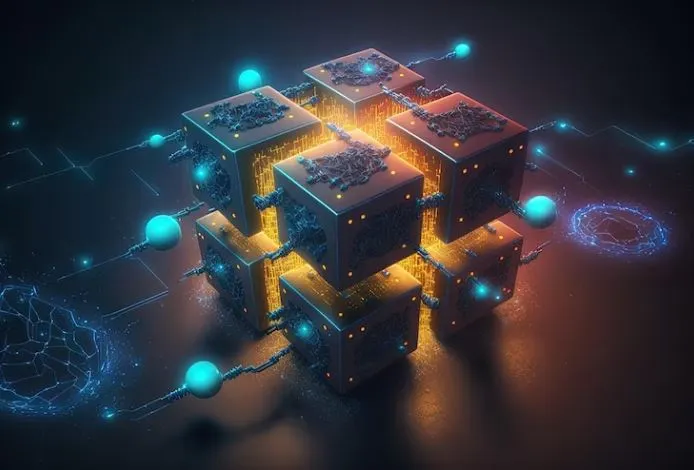
Progress in technology has never moved in neat single-file lines. But the current period is unusually even by historical standards. Eight distinct capability domains are simultaneously crossing from experimental to operational — and their interaction effects are compounding. According to the World Economic Forum, more than 85 million roles will be disrupted and 97 million new positions created by the intersection of automation, connectivity, and intelligent systems alone. Gartner places the combined addressable value of emerging AI technologies for business needs at over $3 trillion, with enterprise adoption accelerating across every major sector. McKinsey estimates that organisations successfully embedding the latest technology trends into core operations gain productivity advantages of 20 to 45% over those running on conventional approaches — a gap that widens as the underlying capabilities mature.
These figures do not fully capture what is unfolding. The most consequential impact of emerging technologies in business is not any single application — it is the compounding effect when AI-driven decision-making sits inside a high-speed connected environment, while quantum processing accelerates the cryptography securing blockchain infrastructure, and extended reality reshapes how humans interact with all of it. Grasping each technology individually is necessary. Understanding how they interact is where genuine strategic advantage begins. This guide examines all eight — what they actually do, where they are generating results right now, and how Q3 Technologies deploys them for organisations ready to act.
Eight Innovative Technologies Defining the Next Era of Business
01. Artificial Intelligence and Generative AI
The conversation about artificial intelligence and generative AI has shifted decisively beyond productivity tools. The frontier today is agentic AI — a system that sets sub-goals independently, selects tools without prompting, and executes multi-step workflows without human oversight at each stage. In enterprise environments, this means AI is writing and testing code, adjusting procurement parameters, monitoring financial positions, and generating architectural designs against engineering constraints — all without waiting for a human to initiate each action.
According to Stanford’s AI Index, enterprise AI adoption has tripled over four years, with the fastest growth in autonomous decision-making applications rather than assistive tools. The distinction is significant: productivity AI makes human workers faster; autonomous AI changes which tasks require a human. Sectors with high cognitive labour costs — legal services, financial analysis, healthcare administration, software development — are where the disruption and creation dynamics are most sharply visible.
Gen AI development services add a creation capability layer: original code, original molecular designs, original training simulations for other AI systems. The boundary between human-produced and machine-produced output is dissolving in ways that demand organisations rethink accountability frameworks, intellectual property positions, and quality governance architectures rather than simply adjusting workflows.
02. Quantum Computing
Quantum computing does not supersede classical computing — it addresses a specific category of problems where classical architectures are structurally inadequate. Operating with qubits that exist in superposition states rather than binary values and exploiting quantum entanglement to correlate information across vast solution spaces simultaneously, quantum processors can traverse problem landscapes that classical machines would require centuries to explore.
IBM’s quantum-native development stack has moved the technology from controlled laboratory conditions toward hybrid cloud architectures where quantum processors handle optimisation sub-problems alongside classical systems. Financial institutions are applying this to portfolio construction and derivatives pricing. Pharmaceutical researchers are using quantum simulation to model molecular binding — a problem class that will compress drug discovery timelines significantly as the hardware matures. The security implication is equally pressing; sufficiently powerful quantum systems will render current asymmetric encryption standards obsolete, making post-quantum cryptography migration a near-term organisational priority rather than a distant concern.
03. Biotechnology and CRISPR Gene Editing
The commercial maturation of CRISPR-based gene editing represents one of the most significant scientific milestones in recent memory. Where previous genetic modification techniques required imprecise interventions with unpredictable downstream effects, CRISPR-Cas9 and its successor variants allow researchers to locate, excise, and replace specific genetic sequences with precision that was theoretical science a generation ago.
In clinical medicine, this translates into treatments for genetic disorders previously managed rather than resolved. The FDA’s approval of the first CRISPR-based therapeutic for sickle cell disease marked the transition from research possibility to medical reality. Agricultural applications are equally transformative: crop varieties edited for drought tolerance, disease resistance, and enhanced nutritional profiles are addressing food security pressures that conventional breeding and chemical approaches cannot adequately meet. As regulatory frameworks align with the capability, biotechnology will reshape both healthcare economics and global food systems across the coming decades.
Implementing Emerging Technologies That Deliver Business Value
Q3 Technologies translates these capabilities from concept into production deployment with 30 years of enterprise implementation experience across AI, blockchain, XR, robotics, and next-generation connectivity.
04. Advanced Robotics
Advanced robotics has shed the factory-floor constraint that defined the previous generation of technology. AI-powered robotic systems operate in surgical theatres performing procedures at sub-millimetre precision, in retail environments auditing inventory autonomously, in logistics networks managing fulfilment workflows without fixed programming, and in infrastructure maintenance accessing conditions too hazardous for human workers.
The enabling shift is from rule-based to learning-based control. Previous industrial robots demanded precisely controlled, unchanging environments — any variation caused faults and stoppages. Reinforcement-learning-trained systems adjust grip strategy, path planning, and force application in response to real-time sensory data, handling the variation and ambiguity that physical environments inevitably present. As hardware costs fall and software capability rises, the total cost of ownership case for intelligent robotic automation extends into mid-market operations that previously could not justify the investment threshold.
05. Extended Reality: VR, AR, and Mixed Reality
Extended reality unifies virtual reality, augmented reality, and mixed reality under a single framework — and the commercially significant deployments are happening where digital and physical environments genuinely merge rather than simply overlapping. In industrial training, VR simulation environments allow technicians to rehearse high-stakes procedures — turbine overhaul, emergency response, complex surgical techniques — without the cost, risk, or scheduling constraints of physical environments. Research consistently documents knowledge retention rates three to four times higher for VR-based training versus traditional video instruction.
In retail, AR enables consumers to visualise products in their own physical space before committing to purchase — a capability that has demonstrably reduced return rates for early adopters, including IKEA and Sephora. For distributed teams, spatial computing platforms like Microsoft Mesh and Apple’s Vision Pro are creating shared virtual workspaces where colleagues manipulate the same three-dimensional assets simultaneously, removing collaboration barriers that screen-based tools cannot address.
06. Structural Battery Composites
Structural battery composites — carbon-fibre materials engineered to function simultaneously as load-bearing structures and electrochemical energy storage — represent one of the most consequential materials science advances currently transitioning from laboratory to commercial applications. The limiting constraint on electric vehicle range has never been purely chemistry: it has been the weight penalty of battery packs that store energy but contribute nothing to structural integrity.
A chassis component that serves simultaneously as structure and storage eliminates that penalty. Research at Chalmers University has demonstrated structural battery laminates with energy densities sufficient to extend EV range when integrated into body panels and floor structures without additional mass. The same principle applies to consumer electronics, aerospace, and building construction — where energy storage integrated into architectural materials could fundamentally alter how structures interact with energy grids. Commercial scaling timelines depend on manufacturing cost reduction, but the trajectory from research validation to industrial adoption is moving ahead of most roadmap projections.
07. 5G and Emerging 6G Networks
5G networks are still short of full geographic coverage in most markets — yet the next-generation architecture is already in active research and early standardisation phases. The distinction matters because the applications 5G enables at scale — autonomous vehicle coordination, industrial IoT at millions of concurrent endpoints, real-time remote surgical guidance — require not just the bandwidth 5G provides but the ultra-low latency its architecture delivers.
The emerging 6G framework targets sub-millisecond latency alongside peak data rates orders of magnitude beyond current 5G specifications. Applications becoming feasible at 6G scale — haptic internet, holographic telepresence, AI inference at the network edge with negligible delay — will require the convergence of connectivity advances with the AI, XR, and robotics capabilities described throughout this guide. For smart city infrastructure, the significance extends well beyond consumer connectivity: real-time traffic management, neighbourhood-resolution environmental monitoring, and distributed emergency response coordination all depend on the ultra-reliable low-latency characteristics that 5G/6G architecture enables.
Ready to Build With the Technologies Defining the Next Decade?
Tell us the business problem — we will identify which emerging capabilities address it most effectively.
08. Blockchain Technology
Blockchain technology has moved through an extended hype cycle and emerged with a clearer, more defensible value proposition: distributed ledger infrastructure that allows multiple parties to transact and exchange records without requiring a central authority, with tamper-evidence enforced by cryptographic architecture rather than institutional trust alone. The financial sector applications — institutional digital asset custody, cross-border settlement, tokenised securities — have attracted the most capital and regulatory attention.
The more durable commercial value may reside in supply chain provenance verification, where tracing a product’s complete journey from origin to end-customer without relying on any single party’s record-keeping addresses both compliance obligations and counterfeiting exposure. IBM’s Food Trust platform, deployed with Walmart and global retailers, demonstrates what blockchain-based provenance looks like at retail scale. Smart contracts — self-executing code on programmable blockchains — are automating agreement execution across insurance claims, real estate transactions, and trade finance workflows, stripping out the manual verification steps that introduce delay and cost. The combination of blockchain identity infrastructure with AI-driven verification is also producing credential frameworks that resist both forgery and centralised data breach exposure.
Why Convergence Is the Real Story — Not Any Single Technology
Each technology above generates value independently. The more significant competitive shift, however, is occurring at the intersection points. Autonomous AI agents coordinating physical robots across 5G-connected sensor networks, with every decision logged on tamper-evident blockchain ledgers and the entire operation visualised through extended reality interfaces — this is not speculative architecture. Components of this converged stack are operating in leading logistics, healthcare, and manufacturing environments right now.
“Organisations that will define the next decade are not those deploying one emerging technology well. They are those engineering the intersection points between several simultaneously.” — Q3 Technologies Innovation Practice Lead
The strategic challenge this creates is prioritisation under genuine uncertainty: which intersection points are worth investing in now, which warrant monitoring until maturity, and which represent competitive exposure if rivals act first? These are business questions before they are technical ones. Answering them well requires both domain depth in the technologies and clarity about which operational problems most urgently need solving.
How Q3 Technologies Deploys These Capabilities
Three decades of enterprise technology delivery across these domains have produced an engagement model with a consistent starting point: business problem first, technology architecture second. The deployments that generate durable value are rarely those organised around a single capability. They are those where a specific operational challenge is defined with precision, the most appropriate capability combination is selected, and implementation is engineered with change management built in from the outset rather than appended at go-live.
Q3 Technologies brings specific depth across the full stack:
- AI and Gen AI: Custom model development, agentic workflow architecture, and enterprise integration for autonomous decision-making at scale.
- AI Workflow Automation: AI control systems, computer vision, and human-robot collaboration architectures across manufacturing, logistics, and healthcare.
- 5G and 6G Application Development: Edge computing architectures and ultra-low-latency applications engineered for next-generation network infrastructure.
Conclusion
The eight innovative technologies covered here are not on a uniform timeline. Some — AI, 5G, blockchain — are producing measurable operational outcomes in live deployments at scale. Others — quantum computing, structural battery composites, 6G — are crossing the threshold between research validation and commercial application. Biotechnology and extended reality sit at different points on that spectrum depending on the application.
What is consistent across all eight is the direction: wider deployment, falling unit costs, and compounding capability. Organisations that have already invested in implementation expertise are building advantages that are genuinely difficult to replicate quickly. The gap between early and late adopters does not narrow as these technologies mature — it widens, because deployment experience produces better decisions, which produce better outcomes, which justify further investment. The organisations that will define the next decade are not waiting for the technologies to mature further. They are building with what is available now.

Table of content
- Eight Innovative Technologies Defining the Next Era of Business
- Why Convergence Is the Real Story — Not Any Single Technology
- How Q3 Technologies Deploys These Capabilities
Need to hire offshore developers?
Looking for a Trusted Technology Partner?
From AI development and chatbot solutions to enterprise software and mobile apps, Q3 Technologies delivers end-to-end technology services.
Contact usExplore More


Software Development
Guide To Hire An Offshore Development Team in India
Health Insurance App