Software
Top 10 Logistics App Development Companies
 Updated 01 Aug 2025

If your logistics operations are still running on spreadsheets, legacy TMS tools, or disconnected systems, you already know the pain: missed deliveries, invisible inventory, frustrated customers, and mounting operational costs. You’re not alone. But the businesses pulling ahead in 2026 are the ones who’ve invested in the right logistics software development company.
This guide cuts to the chase. We’ve researched and ranked the top 10 logistics app development companies — the firms with the technical depth, domain expertise, and proven track records to build solutions that actually work at scale.
Whether you need real-time fleet tracking, AI-powered route optimization, warehouse automation, or end-to-end supply chain visibility, the right development partner can transform your operations. Here’s how to find them.
The Logistics Technology Market in 2026: Why Now Is the Time to Invest
The numbers tell a compelling story. This is not a market niche — it’s a global economic necessity:
$17.82 Billion
Global logistics software market in 2025 — projected to reach $35.84B by 2033 at 9.18% CAGR (SNS Insider, 2026)
- The global logistics market stands at $11.23 trillion in 2025, projected to reach $24.36 trillion by 2035 at a CAGR of 8.05% (Precedence Research).
- Last-mile delivery alone is a $177–184 billion market in 2025, expected to grow to $453 billion by 2035 — driven by e-commerce and same-day delivery expectations (ResearchNester / Research and Markets).
- Logistics automation is projected to reach $144.78 billion by 2031, growing at a CAGR of 9.78%, fueled by labor shortages and net-zero commitments (ResearchAndMarkets, 2026).
- Cloud-based logistics platforms are growing at 13.3% CAGR, reaching $77 billion by 2035 — as businesses abandon legacy systems for scalable, AI-enabled cloud infrastructure (ResearchNester).
- India’s logistics market is valued at $532 billion in 2025, with the country aiming to reduce logistics costs from 13% to 8–9% of GDP by 2030 — creating huge demand for smart logistics software (Cargoson / National Logistics Policy).
The Real Pain Points Driving Demand for Logistics App Development
Before selecting a logistics software development company, it helps to understand exactly what problems you’re trying to solve. The most common pain points we hear from logistics operations leaders in 2026:
- Last-mile costs are out of control. The last mile accounts for up to 53% of total shipping costs (Mobility Infotech Logistics). Without AI route optimisation, you’re overpaying on every single delivery.
- Customer expectations have never been higher. Around 66% of US shoppers now expect same-day delivery options, and 84% of customers won’t return after a missed delivery window. Real-time tracking is no longer a ‘nice to have’.
- Legacy systems create data silos. Disconnected fleet, warehouse, and accounting systems mean your team is constantly reconciling data manually — wasting hours and introducing costly errors.
- Labour shortages are accelerating the automation imperative. Labour scarcity, especially in North America and Europe, is now a strategic bottleneck. Automated warehouse and fleet management systems are filling the gap faster than new hiring ever could.
- Compliance is a moving target. Customs regulations, GDPR, HIPAA, and environmental mandates are changing constantly. Businesses with outdated systems face both financial penalties and reputational risk.
- Scaling is painful without the right architecture. A logistics app that works brilliantly for 500 daily orders often collapses at 50,000. Scalable, cloud-native architecture is essential from day one.
Top 10 Logistics App Development Companies in 2026
These companies have been selected based on technical capability, domain expertise, client track record, innovation culture, and post-launch support quality.
1. Q3 Technologies
Q3 Technologies is a top-tier logistics software development company combining deep domain expertise with cutting-edge AI and cloud capabilities. Their logistics solutions are trusted by global brands across supply chain, transportation, and warehousing — built to handle the scale, complexity, and real-time demands of modern logistics operations. From AI-powered route optimisation and fleet management to warehouse automation and integrated accounting systems, Q3 Technologies delivers end-to-end logistics platforms that drive measurable operational ROI. ISO-certified and agile, they support businesses from MVP to enterprise-scale deployment with transparent communication and robust post-launch support.
Core Services: Logistics App Development · AI-Powered Route Optimisation · Real-Time Fleet & Shipment Tracking · Warehouse Automation · ERP & Accounting Integration · Supply Chain Visibility Platforms · Custom TMS/WMS Development
Why Choose: ISO-certified with a proven global client base. Q3 offers tailored logistics platforms, rapid deployment, AI-first engineering, and dedicated post-launch support — making them an ideal partner for both logistics startups and enterprise supply chain teams.
Streamline Your Logistics Operations with Q3 Technologies
Leverage our AI-powered logistics solutions for real-time tracking, route optimization, and warehouse automation.
2. AllRide Apps
AllRide Apps delivers flexible, scalable logistics management systems built for diverse supply chain needs. Their platform is designed with strong UI/UX principles, making it genuinely usable for drivers, warehouse staff, and managers alike — not just technically impressive on paper. Their AI-enabled feature set covers route planning, fleet optimisation, and real-time delivery tracking, making them a strong fit for logistics businesses focused on last-mile delivery excellence.
Core Services: Fleet Management Software · Route Optimisation · Real-Time Tracking · Custom Logistics App Development · On-Demand Delivery Platforms
Why Choose: Strong fit for businesses prioritising user adoption alongside technical capability. Their adaptive approach ensures the platform evolves with your operation, not against it.
3. Softeq
Softeq occupies a unique position in the tech logistics space: they combine software development expertise with embedded hardware and IoT engineering. This makes them especially powerful for logistics companies that need deep sensor integration, vehicle telematics, or cold chain monitoring — not just standard app features. Their bespoke approach ensures solutions fit specific workflows rather than forcing workflows to fit generic software.
Core Services: Transportation Management Systems · Fleet Tracking · Warehouse Automation · Embedded IoT Solutions · Custom Hardware-Software Integration
Why Choose: Ideal for logistics operations requiring deeply integrated IoT capabilities — particularly in temperature-sensitive, high-value, or technically complex supply chains.
4. Agile Infoways
Agile Infoways brings strong technical execution to supply chain and delivery management software. Known for competitive pricing, rapid project timelines, and solid ERP integration capabilities, they are a reliable choice for mid-market logistics businesses looking for well-built platforms without enterprise-level budgets.
Core Services: Supply Chain Software · Delivery Management Apps · Fleet & Inventory Solutions · ERP Integration · Operational Analytics
Why Choose: A strong value-for-money option for SME logistics operators who need reliable, scalable software delivered on time and within budget.
5. Mind Studios
Mind Studios brings a product thinking mindset to logistics app development — their work is known for intuitive interfaces and intelligent features that real users actually adopt. They specialise in mobile-first logistics apps for startups and growth-stage companies, with core capabilities in on-demand delivery platforms and location-based services.
Core Services: Custom Navigation & Routing Apps · Delivery App Development · Route Optimisation · Location-Based Logistics Services · Mobile-First Platforms
Why Choose: A great fit for logistics startups and scale-ups that want beautifully designed, highly functional mobile apps without sacrificing technical quality.
See Why Global Clients Trust Q3 Technologies
Discover real stories of success and innovation from businesses worldwide.
6. Infor
Infor is a global enterprise software leader with deep expertise in cloud-based supply chain management and ERP. Their CloudSuite solutions are used by some of the world’s largest manufacturers, distributors, and 3PL providers. Infor is best suited for large enterprises with complex, multi-region logistics operations that require powerful out-of-the-box functionality combined with enterprise-grade security and compliance.
Core Services: Cloud-Based Supply Chain Management · Transportation Management · Warehouse Operations · ERP for Logistics · Multi-Region Compliance
Why Choose: Preferred by large enterprises and global 3PLs requiring a comprehensive, proven logistics platform with deep ERP integration and enterprise support.
7. Blue Yonder
Blue Yonder is an AI and ML pioneer in supply chain intelligence. Their platform uses predictive analytics for demand forecasting, inventory optimisation, and logistics resilience — capabilities that have become increasingly critical as global supply chain disruptions have become the norm rather than the exception. They serve major retailers, manufacturers, and 3PLs globally.
Core Services: Predictive Analytics · Inventory Optimisation · Demand Planning · AI-Powered Logistics Solutions · Supply Chain Resilience
Why Choose: Ideal for enterprises that need to move from reactive logistics to truly predictive supply chain management. Their AI capabilities are among the most mature in the market.
8. Manhattan Associates
Manhattan Associates is widely regarded as one of the gold standards in enterprise-grade warehouse and transportation management. Their unified commerce platform integrates order management, WMS, and TMS into a single system of record — giving operations leaders complete, real-time visibility across the entire supply chain.
Core Services: Transportation Management Systems (TMS) · Warehouse Management Systems (WMS) · Order Lifecycle Optimisation · Supply Chain Visibility · Predictive Intelligence
Why Choose: Chosen by global retail and manufacturing brands for comprehensive supply chain control. Best suited for enterprises with high-volume, high-complexity fulfilment operations.
9. Descartes Systems Group
Descartes specialises in the often-overlooked but critically important compliance and global trade dimensions of logistics. Their platform covers routing, scheduling, customs compliance, and regulatory management across dozens of countries — making them essential for businesses with international supply chains where documentation errors or compliance failures can halt entire shipments.
Core Services: Routing & Scheduling · Compliance Management · Customs & Regulatory Software · Global Trade Management · Multi-Country Tracking
Why Choose: Best suited for businesses with complex international logistics operations where regulatory compliance, customs management, and cross-border visibility are top priorities.
10. Locus
Locus is one of India’s most innovative logistics technology companies, using advanced AI to automate and optimise the most complex decisions in last-mile delivery — from vehicle allocation to dynamic route mapping and delivery orchestration. Their platform is built for the realities of high-volume, high-velocity logistics operations in emerging markets.
Core Services: AI-Powered Logistics Automation · Route Optimisation · Delivery Orchestration · Last-Mile Intelligence · Fleet Allocation
Why Choose: Ideal for high-growth e-commerce and logistics businesses looking to maximise last-mile efficiency and delivery precision through intelligent automation.
Key Features Every Modern Logistics App Must Have in 2026
The definition of a ‘complete’ logistics app has evolved significantly. Here’s what the market expects today:
1. AI-Powered Route Optimisation
GPS-only navigation is obsolete. Today’s leading logistics apps use machine learning to dynamically reroute based on traffic, weather, vehicle capacity, delivery windows, and fuel costs. According to AI adoption data from Logistics Viewpoints (2026), AI demand forecasting and route intelligence were the standout performers in 2025 and will become standard features in 2026. Businesses using AI routing report significant reductions in fuel expenditure and measurable improvements in on-time delivery rates.
2. Real-Time End-to-End Tracking
Customers and operations managers alike demand live visibility. Modern logistics platforms integrate GPS, IoT sensors, and mobile data to provide second-by-second shipment location, condition monitoring (temperature, vibration), and proactive exception alerts. This is especially critical for pharmaceutical, food, and high-value goods logistics.
3. Warehouse & Inventory Management
Smart warehouse management integrates barcode/RFID scanning, automated reorder triggers, returns processing, and real-time stock visibility into a unified dashboard. With India’s warehouse space expected to surpass 35 million sq ft by 2027 (ResearchAndMarkets), the demand for intelligent warehouse software is growing rapidly across the Asia-Pacific region.
4. Fleet Management & Driver Analytics
From vehicle health monitoring and fuel tracking to driver behaviour scoring and predictive maintenance alerts — modern fleet management software reduces downtime, prevents costly breakdowns, and improves driver safety at scale.
5. Integrated Accounting & ERP Connectivity
Manual billing and invoicing are a liability. Best-in-class logistics apps integrate natively with your accounting software and ERP systems to automate invoicing, payroll, tax calculations, and financial reporting — eliminating reconciliation errors and accelerating month-end close.
6. Sustainable & Green Logistics Capabilities
This is the emerging differentiator of 2026. Environmental regulations and corporate ESG commitments are driving demand for EV fleet management, carbon footprint tracking, and eco-route optimisation. Amazon’s commitment to 1,500 electric trucks in Europe by 2027 signals where the entire industry is heading. Logistics software that doesn’t account for sustainability is already falling behind.
Build Scalable Logistics Apps with Q3 Technologies
Partner with industry leaders to develop logistics and transportation apps tailored to your business needs.
How to Choose the Right Logistics App Development Partner: 8 Critical Questions
With strong options at every price point, the real challenge is choosing the partner whose capabilities match your specific needs. Here’s the framework experienced logistics leaders use:
- Do they have genuine logistics domain experience — not just software experience? A technically brilliant team that doesn’t understand dwell time, proof of delivery, or carrier management will slow you down, not accelerate you.
- What does their technology stack look like? Are they building solutions with modern cloud-native tools, AI/ML frameworks, and IoT integration capabilities? Outdated stacks create future technical debt.
- Can they show verified client references in logistics? Platforms like Clutch provide genuine client interviews. Ask specifically how the company handled delays, scope changes, and post-launch issues.
- How do they handle scalability? A solution that handles 1,000 daily orders may fail at 100,000. Ask specifically about load testing, cloud architecture, and how past clients have scaled.
- What does post-launch support look like in practice? Get specific SLAs for response times, maintenance windows, and how critical bugs are handled. Vague promises are a red flag.
- How do they approach data security and compliance? With cyberattacks on logistics infrastructure rising, ask about ISO 27001, SOC 2, GDPR compliance, and penetration testing practices.
- What is their communication and project management process? Time zone gaps, unclear ownership, and poor reporting are among the top reasons outsourced projects fail. Get specifics.
- What engagement model do they offer? Fixed-price works for well-scoped builds. Time-and-material works for evolving products. Staff augmentation works for scaling existing teams. Choose the model that fits your project reality.
2026 Trends Reshaping Logistics App Development
The logistics technology landscape is evolving faster than at any point in history. Here are the trends your development partner must understand deeply:
AI-Native Planning & Decision Intelligence
AI in 2026 is no longer a bolt-on feature — it’s the foundation. The most successful logistics teams in 2025 used AI to integrate external signals (weather, traffic, demand shifts) into real-time planning, dramatically improving forecast accuracy and response times. In 2026, according to Logistics Viewpoints, AI will transition from an optional enhancement to a built-in component of all major logistics planning tools — including demand forecasting, carrier selection, and dynamic rerouting.
Autonomous Last-Mile Delivery
The autonomous last-mile delivery market was valued at $1.3 billion in 2025 and is projected to reach $11.5 billion by 2035 at a 24.5% CAGR (Global Market Insights). Walmart launched drone delivery pilots with Alphabet’s Wing in December 2025. Uber Eats partnered with Flytrex for drone deliveries in September 2025. Logistics software must now be designed to integrate with autonomous vehicle platforms, drones, and delivery robots — this is no longer a distant future capability.
Green & Sustainable Logistics Tech
ESG commitments and tightening emissions regulations are making sustainability a hard requirement, not a marketing differentiator. Modern logistics platforms now need EV fleet management, carbon footprint tracking, eco-route optimisation, and sustainability reporting modules. Amazon’s 150-vehicle electric HGV fleet expansion in January 2025 signals where investment is flowing at scale.
IoT + 5G-Enabled Real-Time Visibility
Private 5G deployments within warehouses and distribution centres — like those implemented by CJ Logistics — are enabling seamless coordination between indoor robotics, yard management systems, and last-mile carriers. IoT sensors on vehicles and packages now provide real-time data on location, temperature, shock, and humidity — essential for pharmaceutical, food, and high-value logistics.
Blockchain for Supply Chain Integrity
Blockchain is moving from pilot to production across global trade and pharmaceutical supply chains, where provenance verification, tamper-proof shipping records, and smart contract-based payments are reducing fraud and dispute resolution time significantly. For businesses operating international supply chains, blockchain integration is an increasingly valuable differentiator.
Read Our Case Study: Optimizing Supply Chain with a Robust Logistics and Warehouse Management System for a Major Italian Supermarket Chain
Why Partnering with a Specialist Logistics Software Development Company Delivers Better ROI
Generic software agencies build apps. Specialist logistics software companies build competitive advantages. The difference in outcomes is significant:
- Faster time to value: Domain-expert teams don’t need three months to understand the difference between a TMS and a WMS. They arrive ready to build.
- Solutions built for logistics scale: A logistics app managing 500 daily orders has entirely different architecture requirements than one managing 500,000. Specialist companies design for your growth trajectory, not just your current state.
- Regulatory compliance built in: GDPR, HIPAA, customs regulations, and environmental mandates are factored in at the architecture stage, not retrofitted at launch.
- Seamless integration with your existing stack: Mature logistics development teams have pre-built connectors and integration experience with ERP, CRM, WMS, TMS, and accounting systems — dramatically reducing integration risk.
- Real post-launch partnership: The best logistics software companies treat launch as the beginning of the engagement, not the end.
Final Word: Your Logistics Technology Partner Will Define Your Competitive Position
The logistics industry is in the middle of a technology-driven transformation that is separating the leaders from the laggards at an accelerating pace. AI route intelligence, real-time IoT visibility, autonomous delivery, and cloud-native architecture are no longer future investments — they are present-day competitive requirements.
The companies on this list represent the best of the logistics app development ecosystem in 2026. Each brings distinct strengths — from AI-native startups to enterprise-grade global platforms. The right choice depends on your specific operational complexity, growth trajectory, and strategic priorities.
What’s universal is this: the cost of getting the decision right is far lower than the cost of getting it wrong. A poorly built logistics platform creates technical debt, operational chaos, and customer churn that can take years to reverse.
Frequently Asked Questions
What are the most important logistics app trends in 2026?
AI-native decision intelligence, autonomous last-mile delivery (drones, delivery robots), green logistics capabilities (EV fleet management, carbon tracking), private 5G-enabled IoT visibility, and blockchain-based supply chain integrity are the defining technological trends of 2026. Any logistics app development partner worth working with should have active competencies in at least three of these five areas.
How much does it cost to build a custom logistics app?
Cost varies widely based on scope, features, and team location. A focused MVP (real-time tracking plus route optimisation) might range from $30,000 to $80,000. A full-featured enterprise logistics platform with AI, IoT integration, warehouse management, and multi-region compliance can range from $150,000 to $500,000+. The most important consideration is not the build cost but the long-term ROI — a well-built logistics platform typically pays for itself through fuel savings, labour efficiency, and error reduction within 12–18 months.
What is the difference between a TMS and a WMS?
A Transportation Management System (TMS) manages the movement of goods — routing, carrier selection, shipment tracking, and freight billing. A Warehouse Management System (WMS) manages what happens inside your warehouse — inventory, picking, packing, receiving, and dispatch. Modern logistics platforms increasingly integrate both into unified systems, giving operations leaders complete end-to-end visibility from warehouse floor to customer doorstep.
How long does logistics app development take?
A well-scoped logistics app typically takes 3–6 months for a production-ready MVP and 9–18 months for a full-featured enterprise platform. Timeline depends on integration complexity, feature scope, compliance requirements, and the quality of requirements documentation. Companies that invest in a proper discovery phase (2–4 weeks) invariably deliver faster and with fewer revisions.
What should I look for in post-launch support from a logistics software company?
Defined SLAs for critical bug response (ideally under 4 hours for production-impacting issues), regular maintenance windows, a clear escalation path, proactive performance monitoring, and a roadmap process for feature evolution. Post-launch support quality is consistently cited as the biggest differentiator between good and great development partners — don’t skip this in your evaluation.
Is it better to build custom logistics software or buy an off-the-shelf solution?
Off-the-shelf solutions work well when your logistics operations are standard and your competitive advantage doesn’t depend on technology differentiation. Custom solutions are worth the investment when you have unique workflows, multi-channel operations, integration requirements with legacy systems, or strategic reasons to own your tech stack. Most scaling logistics businesses find that custom development, starting from a well-architected core, delivers superior long-term ROI over configuring and licensing commercial platforms.
Table of Content
- The Logistics Technology Market in 2026
- The Real Pain Points Driving Demand for Logistics App Development
- Top 10 Logistics App Development Companies in 2026
- Key Features Every Modern Logistics App Must Have in 2026
- How to Choose the Right Logistics App Development Partner: 8 Critical Questions
- 2026 Trends Reshaping Logistics App Development
- Why Partnering with a Specialist Logistics Software Development Company Delivers Better ROI
- FAQs

Explore More
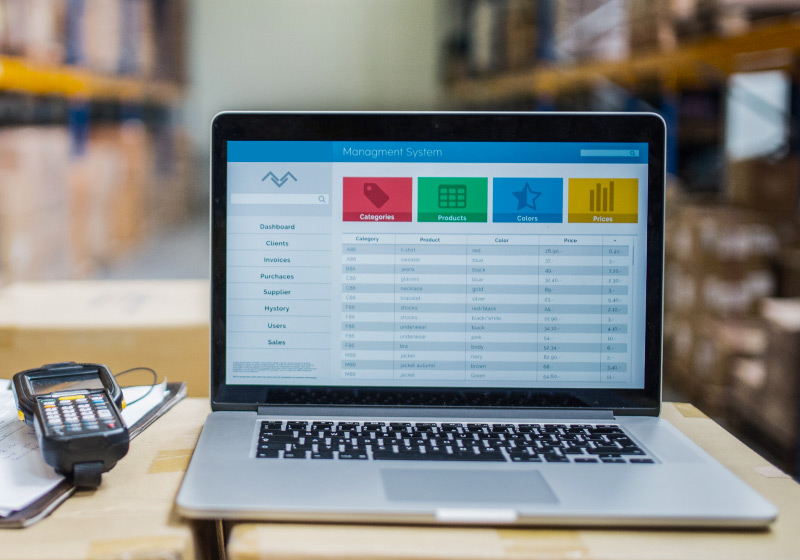

Supply Chain Management System
How to Develop an Efficient Supply Chain Management System?

Software Development