


Education • AI-Driven Solutions


From data curation and training pipeline design to PEFT fine-tuning, safety alignment, model evaluation, and production MLOps — we deliver the complete spectrum of LLM fine-tuning services, purpose-built for the accuracy, compliance, and latency requirements of enterprise AI deployments. Every engagement is backed by hands-on practitioners who have shipped domain-adapted AI models into production environments.

The quality of a fine-tuned model is determined entirely by the quality of the training data. We design and execute the data curation, annotation, and formatting pipelines that give your fine-tuning program the dataset it needs to succeed — before a single training run begins.
Domain Data Collection and Cleaning: We work with your subject matter experts and data teams to identify, extract, clean, and deduplicate the domain-specific corpora — clinical notes, legal filings, financial reports, technical manuals, customer interaction logs — that will shape model behavior.
Instruction Tuning Dataset Construction: We design and produce instruction-following datasets tailored to your target tasks: question-answering pairs, summarization examples, classification training sets, and structured output demonstrations — formatted for supervised fine-tuning (SFT) or reinforcement learning from human feedback (RLHF).

Full fine-tuning of large foundation models is compute-intensive and often unnecessary. We apply parameter-efficient fine-tuning (PEFT) techniques — including LoRA, QLoRA, and Adapter layers — to achieve domain adaptation at a fraction of the compute cost, without sacrificing the foundational capabilities of the base model.
LoRA & QLoRA Implementation: We implement Low-Rank Adaptation (LoRA) and quantized LoRA (QLoRA) to fine-tune models ranging from 7B to 70B+ parameters on enterprise hardware budgets — selecting rank, alpha, and target modules based on your task type and accuracy requirements.
Adapter Layer Architecture: For deployments requiring multiple domain specializations from a shared base model, we design modular adapter architectures that allow domain-specific weights to be swapped at inference time — a single model serving legal, compliance, and operations teams with different domain expertise.

We fine-tune foundation models on instruction-following datasets to align model behavior precisely to your target tasks — whether that is generating compliant clinical documentation, producing structured financial analysis, extracting regulatory entities, or following enterprise communication standards.
Supervised Fine-Tuning (SFT): We train models on curated instruction-response pairs drawn from your domain, teaching the model to follow your specific output format, terminology, reasoning style, and compliance requirements — validated continuously against domain expert benchmarks.
RLHF and Constitutional AI Alignment: Where output quality requires human preference alignment, we implement RLHF pipelines with domain expert annotators and reward model training — ensuring fine-tuned outputs consistently meet the quality, safety, and accuracy standards your enterprise requires.

When a task requires deep domain knowledge that cannot be injected through instruction tuning alone, we run continual pre-training on your proprietary corpora — immersing the model in your domain’s vocabulary, concepts, and knowledge structures before fine-tuning begins.
Domain-Adaptive Pre-Training (DAPT): We extend foundation model pre-training on large proprietary corpora — clinical literature, legal case archives, financial reports, engineering documentation — using distributed training infrastructure to build genuine domain knowledge into the model’s representations.
Vocabulary and Tokenization Optimization: For highly specialized domains with extensive proprietary terminology — pharmaceutical compounds, regulatory codes, engineering part numbers — we extend model vocabularies and retrain tokenizers to improve representation efficiency and reduce inference cost for domain-specific inputs.
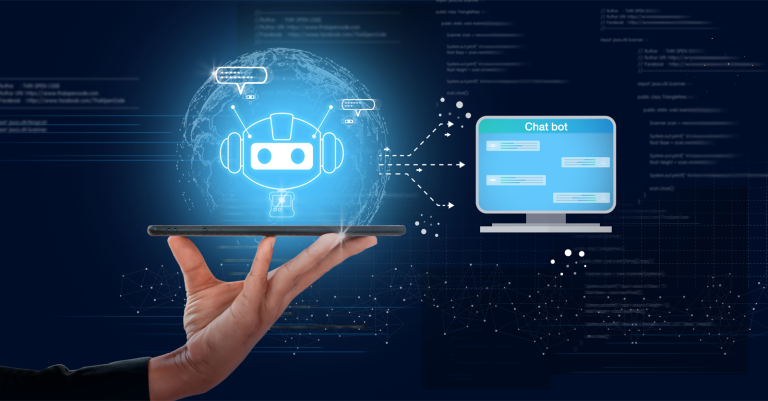

Fine-tuning requires genuine domain knowledge not just ML engineering. We bring industry-specific expertise, regulatory fluency, and domain vocabulary depth to every LLM fine-tuning engagement. Our engineers work alongside your subject matter experts throughout data curation, evaluation, and safety alignment.
 Healthcare and Life Sciences
Clinical note generation, diagnostic support, medical coding, drug interaction analysis, clinical trial documentation, and EHR data extraction. Fine-tuning on clinical corpora with HIPAA-compliant data handling and physician-review evaluation pipelines. Live deployment: AI-powered EEG analysis platform for U.S. neurological diagnostics provider.

 Legal and Compliance
Contract analysis and clause extraction, case law summarization, regulatory change monitoring, compliance Q&A, e-discovery document classification, and legal brief generation. Fine-tuning on jurisdiction-specific legal corpora with attorney-supervised evaluation.

 Education and EdTech
Personalized learning content generation, student query response, course assessment creation, academic policy Q&A, and multilingual educational content adaptation. Live deployment: domain-adapted AI assistant for Australia’s leading EdTech institution, serving thousands of concurrent students.

 Financial Services and Insurance
Credit risk analysis, regulatory document classification, earnings call summarization, AML pattern recognition, claims processing, and compliance monitoring, often paired with behavioral and predictive modeling for risk scoring. Domain-adapted models fine-tuned on proprietary financial data with SEC/FCA audit-logging.

 Manufacturing and Industrial
Maintenance procedure generation, quality control documentation, safety incident analysis, equipment specification extraction, and supply chain communication. Fine-tuning on proprietary technical documentation with domain expert annotation.

 Retail and E-Commerce
Product description generation at scale, review classification and summarization, customer intent analysis, merchandising copy adaptation, and personalized communication — all fine-tuned on proprietary catalog and customer data to maintain brand voice and accuracy.


We combine deep expertise across model fine-tuning, data engineering, evaluation science, safety alignment, and production MLOps delivering domain-specific LLM programs across the full technical stack.


OpenAI GPT-4o fine-tuning API, Meta Llama 3 (8B, 70B), Mistral 7B/8x7B, Google Gemma, Microsoft Phi-3, Falcon, BLOOM, domain-specific biomedical and legal foundation models (BioMedLM, LegalBERT, FinBERT)


Supervised Fine-Tuning (SFT), LoRA, QLoRA, Adapter layers, Prefix tuning, Prompt tuning, RLHF, DPO (Direct Preference Optimization), continual pre-training, domain-adaptive pre-training (DAPT)


AWS SageMaker, Azure Machine Learning, Google Vertex AI, Hugging Face Transformers + PEFT, DeepSpeed, FSDP (Fully Sharded Data Parallel), mixed-precision training, gradient checkpointing, multi-GPU and multi-node training


Instruction dataset construction, preference data collection, human annotation pipeline design, data deduplication (MinHash), quality filtering, domain expert review workflows, synthetic data generation for low-resource domains


Domain-specific evaluation harnesses, EleutherAI LM Evaluation Harness, custom benchmark design, RAGAS for RAG-augmented evaluation, hallucination detection, TruthfulQA, safety red-teaming, output guardrails (NeMo Guardrails, Guardrails AI)


vLLM, TGI (Text Generation Inference), Triton Inference Server, ONNX, quantization (GPTQ, AWQ, bitsandbytes), KV cache Optimization, A/B model testing, model registry, drift detection, automated retraining triggers
In a crowded AI landscape, our differentiation lies in building and deploying AI solutions that deliver measurable business outcomes. We develop domain-adapted, production-ready models engineered for performance, scalability, and real-world impact.
Years of Engineering Experience
Projects Deployed to Production
Global Clients Across 21 Countries
Offices Across the Globe
Every LLM fine-tuning engagement follows a structured six-phase methodology — refined across 25+ years of enterprise AI delivery and designed to address the specific failure modes of domain-adapted model programs: poor training data, inadequate evaluation, and under-resourced production operations.
PHASE 01

PHASE 02

PHASE 03

PHASE 04

PHASE 05

PHASE 06

Tell us about the AI task you need to specialize, the domain data you hold, and the accuracy or cost targets you are trying to hit. We will design a fine-tuning program grounded in your actual data and delivered by engineers who have shipped domain-adapted models into production.
Domain-specific LLM fine-tuning adapts a pre-trained model's weights to your industry's vocabulary and tasks, often paired with chatbot development for domain-accurate conversational AI.
Fine-tune when you need consistent vocabulary and format at scale, lower inference cost, or air-gapped deployment; use RAG for current, updatable knowledge.
Full fine-tuning updates all parameters; LoRA updates under 1% at far lower cost; QLoRA adds 4-bit quantization, enabling large-model tuning on single GPUs.
As few as 1,000–10,000 quality instruction pairs for LoRA tuning; 10M+ tokens for continual pre-training. Data quality matters more than volume.
A focused engagement typically reaches a production-ready model in 10–16 weeks; larger programs with continual pre-training or multi-region deployment take 20–32 weeks.
We curate expert-reviewed training data, optimize with DPO against hallucination, run domain-specific evaluation benchmarks, and combine with RAG where appropriate.
Training data stays within your agreed perimeter, is never reused across clients, and is handled under ISO 27001-certified, CMMI Level 3 processes.
Yes. We deploy fine-tuned models on-premises or in private cloud using vLLM, TGI, or Triton, standard for regulated and data-sovereign clients.
Fine-tuning adapts model weights for consistent domain behavior; RAG retrieves current knowledge at inference time. The strongest architectures combine both.
ROI comes from 70–90% lower inference cost, fewer errors and escalations, 60–80% faster response times, and materially reduced regulatory risk.

What Happens Next?
 100% Confidential. NDA available on request.Response within 4 business hours.No obligation to get started.
Share Your Requirements

Your information is secure and never shared with third parties.

Thank You!
We will contact you within four business hours. In the meantime, feel free to explore our case studies or read our latest Insights.


