AI
The Role of AI in Legacy Application Modernization
Key Takeaways
- AI significantly accelerates legacy application modernization by automating code analysis, refactoring, testing, and migration, reducing project timelines and manual effort.
- Legacy system assessment is the foundation of successful modernization, helping enterprises identify risks, dependencies, and the most effective modernization strategy before execution.
- AI-powered cloud migration improves speed, accuracy, and cost efficiency through intelligent workload assessment, automated provisioning, continuous validation, and predictive cost estimation.
- Generative AI enhances developer productivity by explaining legacy code, generating modern equivalents, creating documentation, and producing test cases while preserving critical business logic.
- Partnering with an experienced modernization provider like Q3 Technologies enables enterprises to modernize legacy applications with lower risk, stronger governance, and scalable, cloud-ready architectures that support long-term business growth.
Every enterprise carries legacy weight somewhere in its technology stack, whether it’s a decades-old core banking engine or an internal tool nobody dares to touch anymore. The real problem isn’t that these systems still run — it’s what they cost to keep running.
Gartner has estimated that recently, businesses would be spending as much as 40% of their total IT budgets simply holding legacy technical debt together. That isn’t innovation spend — that’s survival spend. McKinsey’s research adds another layer to the picture: CIOs report that 10 to 20% of technology budgets earmarked for new products quietly gets redirected into fixing problems created by aging systems.
The real damage shows up in speed. Slow release cycles, brittle integrations, security patches that never quite land on time, and engineers spending nearly a third of their week untangling old code instead of building new value. For enterprises competing in a market where customers expect instant digital experiences, legacy drag isn’t a technical footnote — it’s a competitive disadvantage. This is exactly where artificial intelligence, paired with the right AI Solution Development partner, changes the equation.
- Rising maintenance costs: Industry benchmarks place legacy maintenance between 60 and 80% of total enterprise IT spend, leaving little budget for new development.
- Security exposure: Unsupported platforms accumulate vulnerabilities faster than security teams can patch them.
- Talent scarcity: Specialists in older languages like COBOL and PowerBuilder are retiring faster than they’re being replaced.
- Integration friction: Legacy systems struggle to connect with modern APIs, cloud services, or AI tools without heavy custom engineering.
What is AI for Legacy System Modernization, and Why Does It Matter Now?
This approach refers to the use of machine learning, natural language processing, and generative models to understand, document, refactor, and migrate old application code and architecture — work that used to depend entirely on scarce human expertise and months of manual effort.
Instead of engineers manually reading through millions of lines of undocumented code, AI models can scan the codebase, map dependencies, flag dead code, and generate accurate documentation in a fraction of the time. This matters now because enterprises are being pulled from two directions at once: aging infrastructure that can’t support modern workloads, and a market that increasingly expects AI-ready, cloud-native systems.
- Faster code comprehension: AI models read and explain undocumented legacy logic that would take humans weeks to interpret manually.
- Automated dependency mapping: Machine learning tools trace hidden integrations across monolithic systems before a single line of code changes.
- Predictive risk scoring: AI flags which modules are most likely to break during migration, so teams can plan around them in advance.
Modernize Legacy Applications with AI
Turn outdated applications into secure, scalable, and cloud-ready systems with AI-powered modernization.
How AI Helps Modernize Legacy Applications?
AI doesn’t just speed up modernization — it changes how the entire process is planned and executed. Here’s what that looks like in practice:
- Automated code translation: AI models convert legacy languages such as COBOL, VB6, or PowerBuilder into modern equivalents like Java or C#, preserving business logic while removing outdated syntax.
- Intelligent test generation: Instead of manually writing regression tests, AI tools generate test cases directly from existing application behavior, protecting functional parity during migration.
- Architecture recommendations: AI-driven analysis suggests whether an application should be re-hosted, re-platformed, or fully re-architected based on complexity, cost, and business value.
- Continuous anomaly detection: Once modernized, AI-powered monitoring tools catch performance issues before they ever reach end users.
Each of these capabilities reduces the manual burden on engineering teams, shortens delivery timelines, and lowers the overall risk profile of a modernization program.
What Makes AI-Driven Application Transformation Different from Traditional Modernization?
Traditional modernization projects rely heavily on human judgment at every single stage — manual code reviews, manual test writing, manual architecture decisions. This shift in approach flips that model. AI takes on repetitive, pattern-based work, while human architects focus on the strategic decisions that actually move the needle: what to modernize, when to do it, and how much risk the business can absorb.
The difference shows up in three places: speed (weeks instead of months for code analysis), accuracy (fewer human errors during code translation), and cost (fewer billable hours spent on repetitive documentation and testing). Enterprises adopting AI-driven transformation aren’t skipping steps — they’re compressing timeframes without compromising on quality or governance.
How Does Cloud Migration with AI Work?
This process works by pairing automated discovery tools with intelligent recommendation engines that assess workloads, dependencies, and cost implications before a single application moves. Rather than guessing which applications are cloud-ready, AI analyzes usage patterns, resource consumption, and integration complexity to recommend the right migration path — lift-and-shift, re-platform, or full refactor.
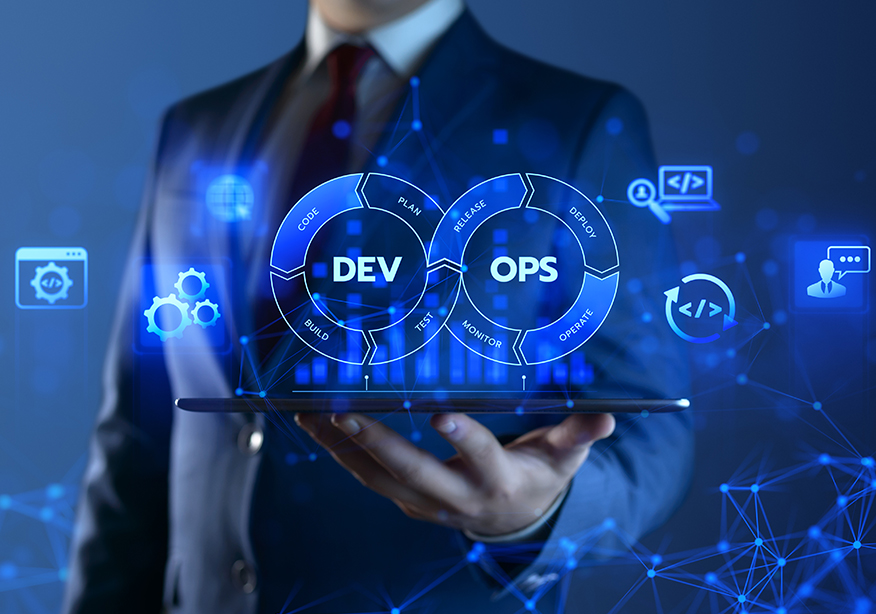
This approach pairs naturally with modern cloud development, where AI-assisted pipelines provision infrastructure, configure environments, and validate deployments with far less manual scripting than traditional methods. When combined with devops practices, AI-powered automation keeps continuous integration and deployment pipelines running smoothly throughout migration, catching configuration drift and failed builds before they ever reach production.
- Workload assessment: AI evaluates thousands of application dependencies in hours, not weeks.
- Cost prediction: Machine learning models forecast cloud spend before migration begins, avoiding budget surprises later.
- Automated provisioning: AI-assisted infrastructure-as-code tools spin up cloud environments with minimal manual configuration.
- Continuous validation: AI-powered testing confirms migrated applications perform as expected under real cloud conditions.
For a deeper breakdown of migration approaches, our detailed guide on cloud migration strategies walks through rehosting, re-platforming, and refactoring in more depth.
What Role Does Generative AI Play in Legacy Application Modernization?
Gen AI for legacy application modernization is arguably the biggest shift this space has seen in the past two years. Gartner predicts that by 2027, generative AI tools will be capable of explaining legacy business applications and generating appropriate replacements, cutting modernization costs by as much as 70 percent. McKinsey’s own developer studies found that generative AI tools helped engineers complete common coding tasks nearly twice as fast, with refactoring and documentation work finishing in close to half the usual time.
In practical terms, generative AI can read an undocumented legacy module, explain what it does in plain English, generate equivalent modern code, and even draft the test cases needed to confirm the new code behaves identically to the old one. This doesn’t eliminate the need for experienced engineers — it gives them a massive head start, so their time goes toward architecture decisions and business validation instead of line-by-line code archaeology.
Assess Your Legacy Systems Before You Migrate
Identify technical debt, modernization opportunities, and the best migration strategy with an expert-led legacy application assessment.
Why is Legacy Application Assessment the Foundation of Every Successful Project?
No modernization program should begin without a thorough assessment of the existing application landscape. Skipping this step is the single biggest reason modernization projects run over budget or stall midway through delivery. A proper assessment maps every dependency, every integration point, and every piece of business logic buried in old code — before any migration decision gets made.
- Business value scoring: Which applications actually drive revenue or customer experience, and which are safe to retire?
- Technical complexity mapping: How tightly coupled is the application to other systems, databases, and third-party tools?
- Risk classification: What could break during migration, and how costly would that downtime be for the business?
- Modernization disposition: Should this application be re-hosted, re-platformed, re-architected, replaced, or retired altogether?
Related reading: our earlier guide on legacy application modernization covers this assessment process step by step.
Which Application Modernization Tools Should Enterprises Rely On?
The right tools for this kind of work depend on the systems being modernized, but a few categories show up in nearly every successful program: AI-powered code analyzers, automated testing frameworks, cloud migration accelerators, and modern frameworks for rebuilding front-end interfaces. For enterprises modernizing customer-facing systems, strong Web Application Development capability matters just as much as backend re-architecture, since the interface is often what users judge the entire modernization effort by.
- Code analysis platforms: Static analyzers and AI code scanners map technical debt across the entire codebase in a fraction of the usual time.
- Automated migration accelerators: Purpose-built tools convert database schemas, batch jobs, and business rules with minimal manual rework.
- Low-code and UI frameworks: Modern frontend frameworks let teams rebuild outdated interfaces quickly without sacrificing usability.
- Monitoring and observability tools: Post-launch, AI-powered monitoring keeps modernized applications stable under real-world load.
How Much Does AI-Powered Application Modernization Cost?
The investment required for this kind of AI-assisted work varies widely depending on scope, but the pattern is consistent: AI reduces the labor-heavy portions of the budget, even as licensing and tooling costs rise slightly. A focused single-application modernization project — covering re-platforming, cloud migration, and API integration — typically falls into a defined, project-based budget range, while a full enterprise-wide transformation covering multiple mission-critical systems and mainframe migration is a much larger, multi-phase investment.
- Application complexity: More integrations and dependencies mean more assessment and testing time.
- Data volume: Larger datasets require more extensive migration, validation, and reconciliation work.
- Modernization approach: Re-hosting is faster and cheaper; full re-architecture costs more upfront but delivers greater long-term value.
- AI tooling adoption: Higher upfront investment in AI-assisted platforms typically pays back through faster delivery and lower manual testing costs.
- Ongoing support: Post-launch monitoring, optimization, and legacy maintenance during transition all factor into total cost of ownership.
Enterprises that pair AI adoption with a phased modernization roadmap typically see the fastest payback, since early wins help fund later phases of the program.
Accelerate Enterprise Transformation with Q3 Technologies
Reduce modernization costs, minimize migration risks, and modernize faster with AI-driven application transformation services.
Case Study: How Q3 Technologies Modernized a Legacy ERP Into a Web-Based Platform
A global technology services provider approached Q3 Technologies with a familiar problem: a legacy ERP system that had become too rigid to support new business requirements, too costly to maintain, and too disconnected from modern reporting and integration needs.
Our team ran a structured discovery and dependency assessment across the entire ERP environment, then rebuilt the platform as a modern, scalable web application development project — preserving critical business logic while replacing outdated interfaces and infrastructure with a cloud-ready architecture. The result was a unified, web-based ERP platform that improved system performance, simplified maintenance, and gave the client’s teams faster access to the data they needed to make decisions.
This project reflects how we approach every legacy application modernization engagement at Q3 Technologies: assess honestly, modernize strategically, and protect business continuity throughout the transition.
Explore more examples of our modernization work through our custom software development services portfolio, where we’ve helped enterprises across manufacturing, energy, and technology consolidate outdated systems into unified digital ecosystems.
Why Choose Q3 Technologies for AI in Application Modernization Services?
When enterprises look for a partner to lead this kind of AI-powered transformation program, they need more than a vendor who can write code — they need a team that understands both the legacy technology being replaced and the AI tools accelerating that replacement.
- 25+ years of engineering experience across mainframe, cloud, and modern application platforms.
- ISO 27001-certified delivery and CMMI Level 3 process maturity, ensuring modernized applications meet enterprise-grade security standards.
- Proven software modernization services delivered across banking, healthcare, manufacturing, government, and retail sectors.
- A structured six-phase delivery framework covering discovery, architecture, execution, data migration, testing, and post-launch optimization.
- Global delivery teams across India, North America, Australia, Europe, and the Middle East, supporting enterprises across 21-plus countries.
- Honest guidance on modernization versus replacement — Q3 Technologies measures success by business outcomes, not by the volume of work sold.
Ready to Modernize With AI on Your Side?
AI has moved legacy application modernization from a slow, high-risk undertaking into a faster, more predictable business investment. From automated code assessment to generative AI-assisted refactoring and AI-driven cloud migration, the technology is doing what human teams alone could never do fast enough: turning decades of technical debt into a modern, scalable foundation for growth.
If outdated systems are holding your business back, now is the time to act. Partner with Q3 Technologies to turn your legacy applications into modern, AI-ready platforms built for what comes next.
FAQs
1. How can AI reduce the cost and timeline of legacy application modernization?
AI automates time-intensive tasks such as code analysis, dependency mapping, documentation, testing, and code refactoring. This reduces manual effort, accelerates delivery, minimizes migration risks, and helps enterprises modernize legacy systems more cost-effectively without disrupting business operations.
2. Should we modernize our legacy applications or replace them entirely?
The right approach depends on your application’s business value, technical complexity, maintenance costs, security risks, and future scalability requirements. A comprehensive legacy application assessment helps determine whether rehosting, replatforming, rearchitecting, rebuilding, or replacing the application will deliver the highest return on investment.
3. What are the biggest risks during AI-powered legacy application modernization?
The primary risks include data integrity issues, business disruption, compliance requirements, integration challenges, and preserving critical business logic. These risks can be significantly reduced through AI-assisted impact analysis, automated testing, phased migration strategies, and continuous validation throughout the modernization lifecycle.
4. How does AI improve cloud migration for enterprise applications?
AI evaluates application dependencies, predicts cloud costs, recommends the most suitable migration strategy, automates infrastructure provisioning, and continuously validates application performance after migration. This enables faster, more reliable, and lower-risk cloud adoption for enterprise workloads.
5. How do we measure the ROI of AI-driven application modernization?
CTOs and CEOs typically evaluate ROI using metrics such as reduced maintenance costs, faster release cycles, lower infrastructure expenses, improved developer productivity, increased application performance, fewer security vulnerabilities, and higher business agility. Measuring these KPIs before and after modernization provides a clear view of business impact.
6. Why should enterprises choose Q3 Technologies for AI-powered legacy application modernization?
Q3 Technologies combines over 25 years of enterprise engineering expertise with AI-driven modernization capabilities to help organizations assess, refactor, migrate, and optimize legacy applications. Our structured delivery framework, cloud expertise, and industry experience enable enterprises to modernize securely, reduce technical debt, and build scalable, future-ready digital platforms.

Table of content
- What is AI for Legacy System Modernization, and Why Does It Matter Now?
- How AI Helps Modernize Legacy Applications?
- What Makes AI-Driven Application Transformation Different from Traditional Modernization?
- How Does Cloud Migration with AI Work?
- What Role Does Generative AI Play in Legacy Application Modernization?
- Why is Legacy Application Assessment the Foundation of Every Successful Project?
- Which Application Modernization Tools Should Enterprises Rely On?
- How Much Does AI-Powered Application Modernization Cost?
- Case Study: How Q3 Technologies Modernized a Legacy ERP Into a Web-Based Platform
- Why Choose Q3 Technologies for AI in Application Modernization Services?
- FAQs
Related Case Studies